Introduction:
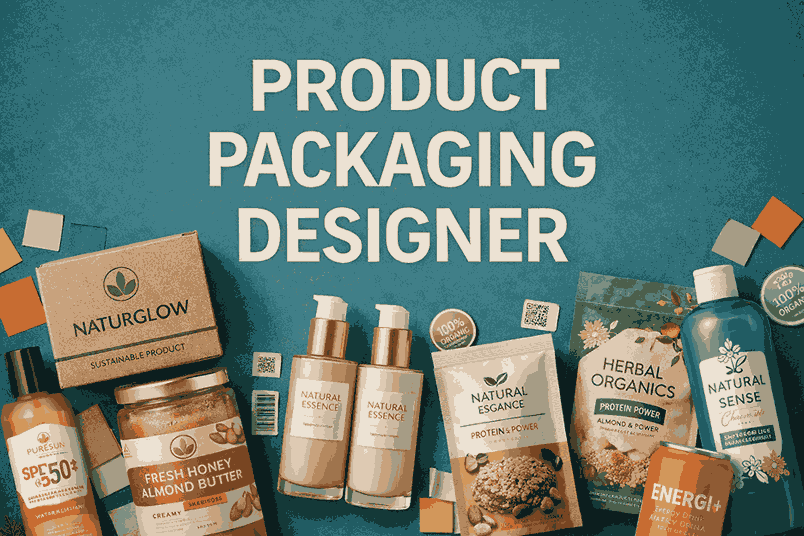
A PRODUCT PACKAGING DESIGNER is no longer just someone who makes boxes or labels look attractive. In 2025, packaging is a sales tool, a brand ambassador, and a decision-maker at the shelf.
Consumers today judge products within 3–5 seconds.
Your packaging decides whether they pick your product—or your competitor’s.
This is why brands across food, cosmetics, FMCG, pharma, and eCommerce invest heavily in professional product packaging designers.
In this in-depth guide, you’ll learn:
- What a product packaging designer really does
- Why packaging directly impacts conversions
- How professional packaging builds trust and recall
- What makes great packaging design in 2025
- How to choose the right packaging designer for your brand
Whether you are launching a startup or redesigning an existing product, this guide will help you make smarter packaging decisions.
What Is a PRODUCT PACKAGING DESIGNER?
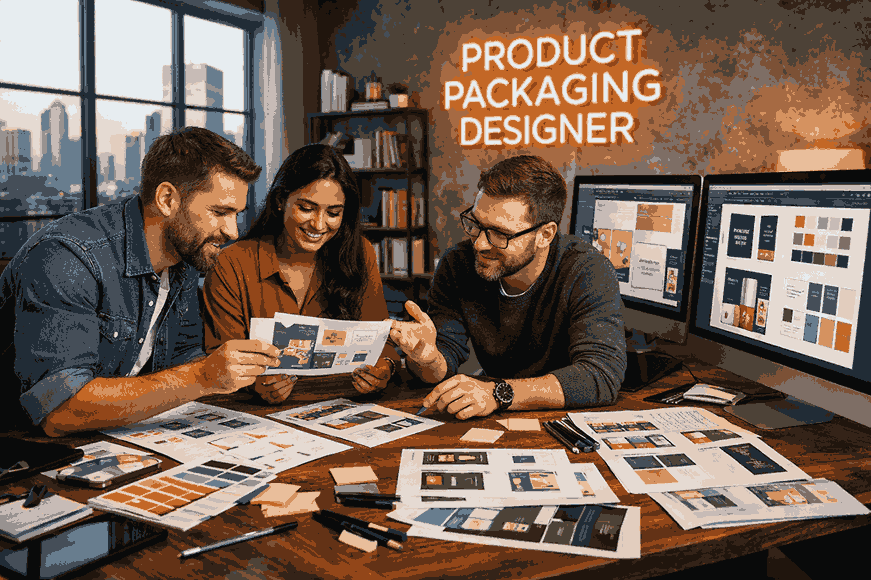
A PRODUCT PACKAGING DESIGNER is a branding specialist who designs the visual and structural packaging of a product to:
- Attract customers
- Communicate value
- Protect the product
- Ensure compliance
- Strengthen brand identity
Packaging design goes far beyond colors and fonts.
It includes:
- Box design
- Label design
- Pouch design
- Bottle and jar labels
- Cartons and corrugated packaging
- Retail and eCommerce packaging
A professional packaging designer combines marketing psychology, design principles, and print knowledge to create packaging that sells.
Why PRODUCT PACKAGING DESIGNER Is Critical for Business Growth
1. Packaging Is the First Physical Touchpoint
Before customers try your product, they experience your packaging.
Great packaging:
- Builds instant trust
- Signals quality
- Sets expectations
Poor packaging does the opposite—even if your product is excellent.
2. A PACKAGING DESIGNER Turns Browsers into Buyers
Packaging directly influences purchasing behavior.
A professional packaging designer:
- Uses visual hierarchy to guide the eye
- Highlights benefits clearly
- Makes the product stand out on shelves
This increases:
- Impulse purchases
- Shelf visibility
- Conversion rates
3. Packaging Builds Brand Recognition
Consistent packaging design helps customers remember you.
A skilled product packaging designer ensures:
- Brand colors are consistent
- Typography matches your brand tone
- Visual elements are repeatable across products
Over time, customers recognize your brand without reading the name.
Key Responsibilities of a PRODUCT PACKAGING DESIGNER
A professional product packaging designer handles multiple tasks, including:
- Brand research and competitor analysis
- Packaging concept development
- Structural layout and dielines
- Label information hierarchy
- Material and finish suggestions
- Print-ready file preparation
They also ensure your packaging works in:
- Physical retail
- Online marketplaces
- Social media visuals
Types of PRODUCT PACKAGING DESIGN Services
Box Packaging Design
Used for:
- Electronics
- FMCG
- Gift products
- Retail packaging
A product packaging designer ensures the box:
- Looks premium
- Protects the product
- Is cost-effective for production
Label Packaging Design
Labels are critical for:
- Food products
- Cosmetics
- Pharma
- Beverages
A professional designer focuses on:
- Readability
- Compliance information
- Shelf appeal
Pouch & Flexible Packaging Design
Flexible packaging is booming in 2025.
A product packaging designer designs:
- Stand-up pouches
- Zip-lock packs
- Sachets
These require expertise in:
- Material limitations
- Printing constraints
- Fold and seal areas
How a PACKAGING DESIGNER Uses Psychology
Great packaging design is rooted in consumer psychology.
A professional product packaging designer uses:
- Color psychology to trigger emotions
- Typography psychology to suggest trust or luxury
- Shapes and layouts to guide attention
Example:
- Green → natural, organic
- Black + gold → premium
- Minimal layouts → modern and trustworthy
This psychological approach directly affects buying decisions.
Storytelling Through PRODUCT PACKAGING DESIGN
Packaging tells a story—without words.
A good product packaging designer:
- Communicates your brand’s purpose
- Reflects your values
- Shows what makes you different
For example:
- A handmade product uses textured visuals
- A luxury brand uses minimal design
- A kids’ product uses bright colors and playful fonts
Customers connect emotionally with brands that tell stories.
PACKAGING DESIGNER vs DIY Packaging
Many businesses try DIY packaging to save costs.
This often leads to:
- Poor print quality
- Low shelf impact
- Inconsistent branding
A professional product packaging designer:
- Saves reprinting costs
- Avoids production mistakes
- Creates scalable designs
In the long run, professional packaging is more affordable.
Common Mistakes a PACKAGING DESIGNER Helps Avoid
A skilled packaging designer prevents errors such as:
- Overcrowded designs
- Poor font readability
- Wrong color modes for printing
- Missing legal information
- Inconsistent branding
These mistakes can cost brands:
- Customer trust
- Retail approvals
- Money and time
What Makes a Great PRODUCT PACKAGING DESIGNER in 2025
A high-quality product packaging designer should have:
- Branding knowledge
- Print production expertise
- Market awareness
- Creativity with strategy
They should understand:
- Indian and global markets
- Online and offline retail
- Sustainability trends
Bonus Insight #1 (of 10): Shelf Impact Testing
Top packaging designers test:
- Shelf visibility
- Distance readability
- Competitor contrast
This ensures your packaging stands out in real-world conditions.
The Step-by-Step Process Followed by a PRODUCT PACKAGING DESIGNER
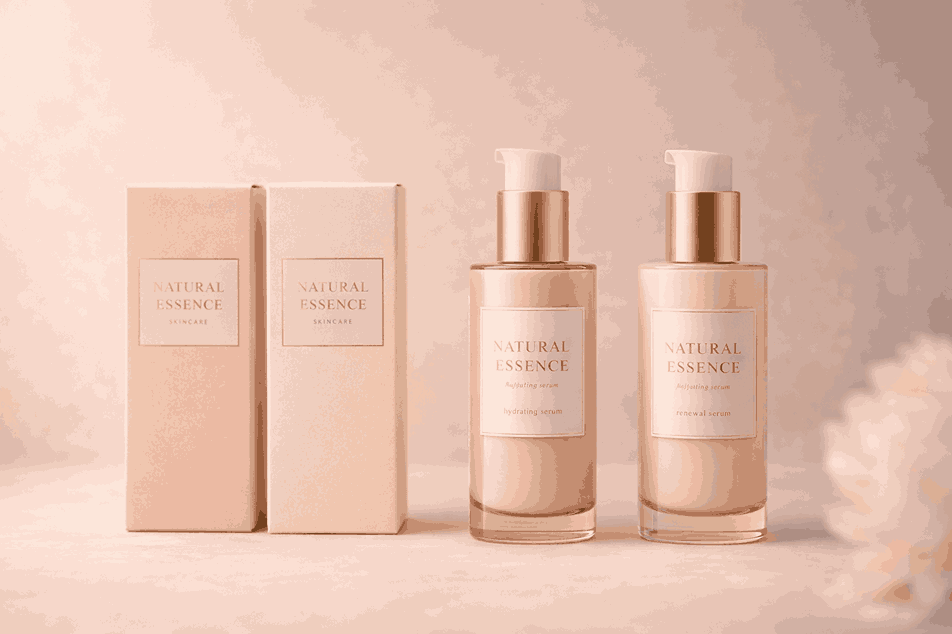
A professional PACKAGING DESIGNER follows a structured process to ensure the final packaging is visually strong, functional, and market-ready.
Skipping steps often leads to redesigns and extra costs.
1. Brand & Product Discovery
The first step is understanding your brand.
A product packaging designer studies:
- Brand values
- Target audience
- Product positioning
- Price segment
- Competitor packaging
This ensures the design aligns with your business goals.
2. Market & Competitor Analysis
Packaging does not exist in isolation.
A professional product packaging designer analyzes:
- Shelf competitors
- Color usage trends
- Packaging shapes and sizes
- Design gaps in the market
The goal is differentiation—not imitation.
3. Packaging Concept Development
Based on research, the designer creates multiple concepts.
Each concept focuses on:
- Visual direction
- Brand story
- Color palette
- Typography style
This stage defines how customers will perceive your product.
4. Structural Layout & Dieline Design
Packaging must be practical.
A product packaging designer ensures:
- Correct dimensions
- Fold and cut accuracy
- Material suitability
- Structural stability
This avoids printing and manufacturing errors.
5. Visual Design & Information Hierarchy
This is where design meets strategy.
A professional product packaging designer carefully places:
- Product name
- Key benefits
- Ingredients or specifications
- Legal information
- Brand elements
Everything is arranged for clarity and impact.
6. Print-Ready File Preparation
Final files are prepared in:
- Correct color modes (CMYK)
- High resolution
- Bleed and margin settings
This step ensures smooth printing with no surprises.
Industry-Specific Role of a PACKAGING DESIGNER
Different industries require different packaging approaches.
Food Packaging Design
Food packaging must balance:
- Attraction
- Trust
- Compliance
A product packaging designer focuses on:
- Appetite appeal
- Clean typography
- Clear ingredient visibility
Poor food packaging directly affects sales.
Cosmetic & Beauty Packaging
Beauty buyers are highly visual.
A professional product packaging designer uses:
- Premium finishes
- Minimal layouts
- Color psychology
Packaging must reflect luxury and quality.
Pharma & Healthcare Packaging
Accuracy and clarity matter most.
A product packaging designer ensures:
- High readability
- Correct labeling
- Regulatory compliance
Trust is the primary goal in pharma packaging.
FMCG & Retail Packaging
Fast-moving products require:
- Shelf impact
- Quick understanding
- Bold branding
A product packaging designer creates designs that sell within seconds.
Sustainable Packaging: A Key Focus for PRODUCT PACKAGING DESIGNER in 2025
Sustainability is no longer optional.
Modern product packaging designers prioritize:
- Eco-friendly materials
- Minimal ink usage
- Recyclable structures
- Clear sustainability messaging
Consumers increasingly choose brands that care about the environment.
10 Powerful Bonus Insights from a PRODUCT PACKAGING DESIGNER
These are expert-level insights most blogs miss.
Bonus Point 1: Packaging Is a Silent Salesperson
Packaging speaks even when no salesperson is present.
A packaging designer designs packaging to:
- Explain benefits
- Create desire
- Reduce buying hesitation
Bonus Point 2: Typography Can Increase Trust
Fonts influence perception.
Professional packaging designers choose typography that:
- Matches product category
- Enhances readability
- Signals reliability
Bad fonts reduce credibility instantly.
Bonus Point 3: White Space Improves Perceived Value
Crowded packaging looks cheap.
A skilled packaging designer uses white space to:
- Improve clarity
- Increase premium feel
- Guide attention
Less clutter means more impact.
Bonus Point 4: Consistency Builds Brand Memory
Using consistent design elements across products creates recognition.
A packaging designer builds:
- Unified color systems
- Repeatable layouts
- Brand recall
Customers remember what they recognize.
Bonus Point 5: Shelf Distance Matters
Packaging must be readable from a distance.
Professional designers test:
- Font sizes
- Contrast levels
- Visual balance
This ensures shelf visibility in real stores.
Bonus Point 6: Material Choice Affects Perception
Material communicates quality.
A packaging designer recommends:
- Matte vs glossy finishes
- Kraft vs coated paper
- Premium laminations
The feel of packaging influences buying decisions.
Bonus Point 7: Packaging Should Photograph Well
In 2025, packaging lives online too.
A professional packaging designer ensures packaging:
- Looks good on eCommerce
- Works for social media
- Is camera-friendly
Digital visibility matters as much as shelf presence.
Bonus Point 8: Minimal Redesign Can Boost Sales
Sometimes small changes make a big difference.
A product packaging designer may tweak:
- Colors
- Typography
- Layout hierarchy
Even minor improvements can increase conversions.
Bonus Point 9: Legal Errors Can Kill a Product
Missing information can stop product distribution.
A professional packaging designer:
- Knows labeling requirements
- Ensures compliance
- Avoids costly reprints
This protects your business.
Bonus Point 10: Packaging Influences Repeat Purchases
Great packaging builds loyalty.
Customers are more likely to repurchase products that:
- Look trustworthy
- Feel premium
- Are easy to use
A packaging designer designs for long-term success.
Recommended Links For More Information
Storytelling Example: Small Brand to Big Success
A small snack brand struggled with sales despite great taste.
They hired a professional packaging designer.
Changes made:
- Clear product name
- Bold color contrast
- Simplified ingredient layout
Result:
- Better shelf visibility
- Higher retailer acceptance
- Increased repeat customers
Packaging transformed the brand’s future.
Value of Hiring a PRODUCT PACKAGING DESIGNER
Well-designed packaging improves:
- Brand searches
- Social shares
- Product recognition
Packaging indirectly supports digital marketing and SEO growth.
How to Choose the Right PRODUCT PACKAGING DESIGNER
Selecting the right PRODUCT PACKAGING DESIGNER can decide the success or failure of your product launch.
Not every designer understands packaging strategy.
Here’s what you should evaluate.
1. Industry Experience Matters
A professional product packaging designer should have experience in your industry.
Why this matters:
- Different industries have different rules
- Consumer expectations vary
- Print and material requirements differ
Always ask for relevant work samples.
2. Understanding of Branding, Not Just Design
Packaging is part of branding.
A good product packaging designer understands:
- Brand positioning
- Target customer psychology
- Visual storytelling
Design without branding strategy leads to confusion.
3. Knowledge of Printing & Materials
Packaging design must work in real life.
Your product packaging designer should understand:
- Printing processes
- Color variations
- Material limitations
- Cost efficiency
This avoids expensive production mistakes.
4. Ability to Design for Both Retail & Digital
In 2025, packaging must perform everywhere.
A skilled product packaging designer ensures:
- Shelf impact in stores
- Clean visuals for eCommerce
- Social-media-friendly design
This multiplies your brand reach.
5. Communication & Revision Process
Clear communication saves time.
Choose a product packaging designer who:
- Explains design logic
- Accepts feedback professionally
- Offers structured revisions
Collaboration leads to better results.
Cost vs Value: Is Hiring a PRODUCT PACKAGING DESIGNER Worth It?
Many businesses hesitate due to cost concerns.
Let’s break it down.
Short-Term Cost Thinking (Wrong Approach)
DIY or cheap packaging often leads to:
- Poor shelf impact
- Low trust
- Redesign costs
- Lost sales
Cheap packaging becomes expensive later.
Long-Term Value Thinking (Smart Approach)
A professional product packaging designer delivers:
- Higher conversions
- Better brand recall
- Retail acceptance
- Customer loyalty
Packaging is an investment, not an expense.
How PRODUCT PACKAGING DESIGNER Improves Conversion Rates
Packaging affects buying decisions instantly.
Professional packaging design improves:
- Product clarity
- Perceived value
- Emotional connection
This directly increases:
- First-time purchases
- Repeat sales
- Brand advocacy
Common Red Flags When Hiring a PRODUCT PACKAGING DESIGNER
Avoid designers who:
- Ignore brand strategy
- Don’t understand printing
- Overcrowd designs
- Copy competitors
- Avoid explaining decisions
A professional product packaging designer is transparent and strategic.
PRODUCT PACKAGING DESIGNER for Startups vs Established Brands
For Startups
Packaging helps:
- Build trust quickly
- Compete with big brands
- Establish brand identity
A product packaging designer creates a strong foundation.
For Established Brands
Packaging redesign helps:
- Refresh brand image
- Increase relevance
- Boost stagnant sales
Even small design updates can make a big impact.
Future Trends Every PRODUCT PACKAGING DESIGNER Is Adopting
In 2025 and beyond, packaging trends include:
- Sustainable materials
- Minimal layouts
- Bold typography
- Smart packaging elements
- Digital-first design thinking
A future-ready product packaging designer stays ahead of trends.
Why Businesses Fail Without a PRODUCT PACKAGING DESIGNER
Many great products fail because:
- Packaging looks untrustworthy
- Design doesn’t match product quality
- Brand message is unclear
Customers don’t give second chances at the shelf.
Packaging decides fate.
Conclusion: Why Choosing the Right PRODUCT PACKAGING DESIGNER Is a Business Decision, Not a Design Choice
In today’s crowded and fast-moving marketplace, success is no longer defined by product quality alone. What truly differentiates winning brands from forgotten ones is how effectively they present, position, and communicate value—and this is where a PRODUCT PACKAGING DESIGNER becomes indispensable.
Packaging is the first conversation your brand has with a customer.
It speaks before your website loads.
It influences decisions before reviews are read.
It builds trust before the product is ever used.
A professional product packaging designer ensures that this first interaction is clear, confident, and compelling.
From shelf visibility and emotional appeal to compliance, usability, and brand recall, packaging design impacts every stage of the customer journey. When done right, it reduces hesitation, increases perceived value, and encourages repeat purchases. When done poorly, even the best products struggle to survive.
In 2025 and beyond, consumers are more design-aware, more selective, and more influenced by visual storytelling than ever before. They expect packaging that looks credible, feels premium, and aligns with their values. Brands that invest in professional packaging design are not just improving aesthetics—they are future-proofing their business.
This is why working with an experienced PRODUCT PACKAGING DESIGNER is not an expense, but a strategic investment. It is a decision that directly affects sales performance, brand equity, and long-term growth.
Whether you are launching a new product, entering a competitive market, or refreshing an existing brand, the right packaging design can redefine how your product is perceived—and ultimately, how well it performs.
In a world where customers judge in seconds, your packaging must do more than exist.
It must stand out, speak clearly, and sell confidently.
Call to Action:
If you’re looking for a reliable PRODUCT PACKAGING DESIGNER who understands branding, market psychology, and print-ready execution, Logo Designer India is your ideal partner.
At Logo Designer India, we specialize in:
- Product packaging design
- Box, label, pouch & bottle packaging
- Brand-consistent visual systems
- Retail and eCommerce-ready packaging
Our team doesn’t just design packaging—we create strategic packaging solutions that help products stand out, build trust, and increase sales.
👉 Choose Logo Designer India to transform your product packaging into a powerful sales tool that speaks for your brand—on shelves, online, and everywhere your product appears.
Frequently Asked Questions (FAQ)
1. Is a PACKAGING DESIGNER necessary for small businesses?
Yes. Small businesses benefit the most because professional packaging builds trust and helps compete with bigger brands.
2. How long does packaging design take?
Typically:
- Simple packaging: 7–10 days
- Complex packaging: 2–4 weeks
Timelines depend on scope and revisions.
3. Does packaging design affect online sales?
Yes. Packaging influences:
- Product images
- Click-through rates
- Brand perception
Good packaging improves digital performance.
4. What industries need a PACKAGING DESIGNER the most?
All industries benefit, especially:
- Food & beverages
- Cosmetics
- FMCG
- Pharma
- eCommerce brands
5. How often should packaging be updated?
Most brands refresh packaging every:
- 2–3 years
- Or when market trends change
A product packaging designer guides the timing.