A logo looks like a design purchase, but you are really hiring someone to understand your business, turn it into a mark that works on a signboard and a phone screen, and hand over files you can legally use for years. That is why how you choose a logo designer matters more than which style you like on day one.
In short: choose the designer whose portfolio shows range, who asks about your customers before sketching, who puts scope, price and timeline in writing, and who delivers editable files along with a signed transfer of rights. The rest of this guide shows how to check each point, whether you are comparing freelancers in your own city or a logo designer in India you will only ever meet on video calls.
The six checks that matter most
- Fit. The portfolio shows range and some work relevant to your kind of customer.
- Process. They start with questions about your business, not with sketches.
- Deliverables. You receive vector master files and ready-to-use variants, not just one JPEG.
- Rights. Ownership is transferred in a signed document.
- Scope and price. Concepts, revisions, timeline and extra costs are spelled out.
- Communication. They answer clearly, give reasons for design choices, and respond on time before you have paid.
Step 1: Decide what you need before you contact anyone
You will get better quotes and better work if you know which of three jobs you are hiring for.
A logo only
A mark, a wordmark, or both. This suits you if your name, colours and tone are already settled and you do not need guidelines or printed material.
A logo inside a brand identity
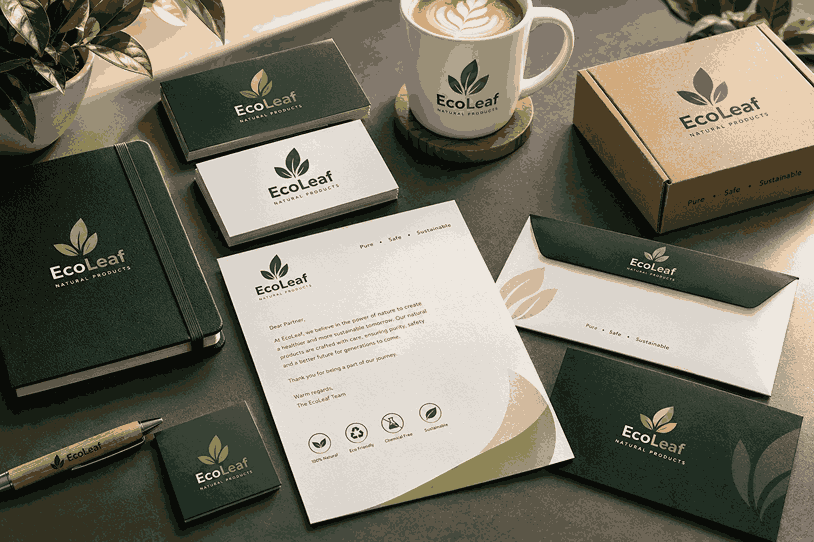
If you are launching or rebranding, a logo alone often leaves gaps: which colours go with it, which fonts, how it sits on packaging, a brochure or a social media profile. In that case look for a brand identity designer in India rather than a logo-only designer. An identity project usually covers the logo plus a colour palette, typography, usage rules and applications such as stationery and social media. It costs more time and money than a logo alone, so decide this before you ask for quotes. Some studios, including Logo Designer India, list these related services (brochures, packaging, stationery, social media design) alongside logo design.
A logo maker or AI tool
An online logo maker can be reasonable for a side project, a one-off event or a placeholder while you test an idea. The trade-offs are practical: template-based results can resemble what other businesses end up with, you rarely get the thinking behind the symbol, and licence terms differ from tool to tool. Ready-made logos are not necessarily exclusive unless you pay for exclusivity, so read what the tool says about commercial use. Searches such as “logo maker in India” or “logo maker near me” mostly return these tools and local print shops. If the logo will sit on your signage, packaging and website for years, a custom designer is usually the safer route.
Step 2: Freelancer, studio or agency: which suits you?
There is no universally right answer. Match the provider to the size of the job.
| Freelance designer | Studio or agency | Logo maker or AI tool | |
|---|---|---|---|
| Best for | Startups, small shops, a single logo | Rebrands, multi-location businesses, full identity systems | Placeholders, personal projects, event logos |
| What you get | Direct contact with the person designing | A team that may include a strategist, designers and a project manager | Instant templates you customise yourself |
| Watch for | Limited availability, no backup if they disappear mid-project | More layers between you and the designer, and a process that may be heavier than you need | Similar-looking results, unclear exclusivity, little custom thinking |
| Ask | “Will you personally design this?” | “Who will design it, and can I speak to them?” | “Can I use it commercially, and is it exclusive?” |
Size is not a quality guarantee. A logo design agency in India may have an impressive client list and still hand your project to a junior designer, while an independent freelancer may produce stronger work. Likewise, a logo design company in India that offers one fixed package may fit a simple job well and a complex rebrand badly. Judge the work and the process, not the label.
Step 3: Read a portfolio like a client
A portfolio shows what a designer has done, not what they will do for you. Read it with these checks:
- Range, not one style on repeat. If every logo uses the same gradient and swoosh, you are buying a style, not a solution to your problem.
- The story behind two or three pieces. Ask what the brief was, what alternatives were tried and why this symbol was chosen. Designers who cannot explain their choices may have started from a template.
- Logos in real use. Look for the mark on a signboard, a bill, a social media avatar. A logo that only looks good in a large mockup may fall apart at small sizes.
- Commissioned versus practice work. Ask which logos were created for real clients and are in use today.
- Originality. Run a reverse image search (Google Lens works) on a few pieces. If the same artwork appears under other names or on stock sites, walk away.
- Relevant experience. Work in your sector helps a designer understand your audience, though it is not essential. A designer with a strong process can learn your market.
- Outside proof. Read reviews on independent platforms and ask for one or two past clients you can contact. Most reputable designers will agree.
This applies equally when you compare logo designers in India through directories such as GoodFirms, DesignRush or Contra. Listings are a starting point; the checks above are what separate candidates.
Step 4: Questions to ask before you hire
You can learn more from a 20-minute call than from a portfolio. Ask:
- Will you personally design this, and who else will work on it?
- What do you need to know about my business before you start? A good designer asks about your customers, competitors and where the logo will appear (business cards, website, social media, billboards).
- How many initial concepts and how many revision rounds are included? What counts as a revision and what counts as a new direction?
- Which files will I receive, and in which formats?
- Will I own the logo, and will you sign a written transfer of rights?
- Have you used stock icons, templates, licensed fonts or AI tools in the design? How are they licensed?
- What is the timeline, and what happens if either side causes a delay?
- How is payment split, and what happens if we stop midway?
- Can I speak to a past client?
- What do you expect from me, such as feedback timelines and who approves the work?
Notice how they answer, not only what they say. A designer who asks you questions back is usually someone who will ask them during the project too.
Step 5: Know what a complete handover includes
Many people discover after payment that they have one image file and no way to use it on a banner or a stamp. A usable logo package normally includes:
- Vector master files (such as AI, EPS, SVG or PDF) that scale to any size without blurring
- PNG files with transparent backgrounds for web and social media
- Colour versions: full colour, one colour (black and white), and a reversed version for dark backgrounds
- Layout variations where they make sense: horizontal, stacked and a square or icon-only version for profile pictures
- Colour codes and font names: HEX or RGB for screens, CMYK or Pantone references for print
- A short usage note or, for identity projects, a brand guideline
Exact formats vary by designer, and some charge extra for source files or additional versions. Get your list confirmed in writing before work starts. If you need Marathi, Hindi or another Indian-language script in the logo, ask to see earlier bilingual work, because lettering in two scripts is a separate skill from English typography.
Step 6: Get ownership in writing
This is the step most “how to choose” guides leave out, and in India it deserves attention. This section is general information, not legal advice. If the logo is central to your business, have a lawyer review the agreement.
Copyright: the assignment
Under the Copyright Act, 1957, the author of a work is generally its first owner, subject to exceptions such as work made in the course of employment. So paying a freelancer does not automatically make you the owner. Moving ownership to you is an assignment, and Section 19(1) says an assignment is valid only if it is in writing and signed by the assignor.
In practice:
- Ask for a short agreement, or a clear clause in the quote or contract, that identifies the logo and states that the rights are assigned to your business.
- Make sure it states the duration and territory. Legal summaries of Section 19 note that when these are left out, the law fills in defaults (a five-year period and India only), which is rarely what a business expects. Check the current text on India Code.
- Do not rely on a chat message saying “the logo is yours”. It may not meet the written-and-signed requirement.
- Ask who holds the rights to any stock elements, fonts or AI-generated parts, because a designer cannot transfer rights they do not have.
Trademark: check before you commit
Copyright and trademark are different things. Owning the artwork does not mean no one else uses a similar mark in your field. Before you approve a final logo, search the free public database at tmrsearch.ipindia.gov.in. It offers word, phonetic and Vienna-code (logo element) searches, and the Vienna-code option is the one that catches similar-looking logos. A logo can be refused registration if it lacks distinctiveness or conflicts with an earlier mark, so a quick search early can save you from rebranding later.
A designer can confirm that they have not copied existing artwork, but trademark clearance is your responsibility, or your attorney’s.
Step 7: Compare scope, not just price
Quotes for logo work in India vary widely depending on the designer’s experience, the complexity of the project, the deliverables and how much branding work is included. Because prices change and depend on scope, comparing the headline number is misleading. Compare like for like:
- Number of initial concepts
- Revision rounds, and what counts as one
- Full list of files and formats
- Rights transfer (in writing, with duration and territory)
- Timeline
- Extra costs: source files, additional formats, a brand guideline, stationery
- Payment schedule, and whether you receive a proper invoice
Ask two or three designers to quote against the same written brief so the answers are comparable. Splitting payment into milestones (for example at start, at concept approval, and on final files) keeps both sides protected. It is reasonable to ask that final files and the signed rights transfer are released on the last payment.
Local or remote? When “near me” matters
Many people start with searches like “logo designer near me” or “professional logo designer near me”. Proximity helps in specific cases: you want an in-person workshop, you need printed proofs or signage checked in person, or you simply prefer to meet before paying.
For most logo projects, video calls, shared documents and file transfers work fine, so a designer in another city is not a disadvantage, and a wider pool lets you choose on fit rather than postcode. Check language and working hours before you commit. If you are in Pune and want a local option, our guide to logo designers in Pune explains the types of designers available in the city.
Red flags to walk away from
- Portfolio pieces that appear under other names or on stock sites
- No questions about your business before quoting
- Promises of dozens of finished concepts in a few hours
- Reluctance to share vector or source files, or to put rights in writing
- Demands for full payment before any work is shown
- A portfolio of mockups only, with no logos in real use
- Vague scope: “as many revisions as you want” with no definition of what that means
- Pressure to decide today
One red flag does not always mean a bad designer, but two or three together are a reason to move on.
A simple scorecard for comparing designers
Score each candidate from 1 to 5, then compare totals. A 5 means the designer showed it clearly and in writing.
| Criterion | What a 5 looks like |
|---|---|
| Portfolio fit | Range of work, some relevant to your market, logos shown in real use |
| Process | Asks about customers and usage before concepts; explains stages |
| Communication | Answers clearly, gives reasons for choices, replies on time |
| Deliverables | Written list of formats and variants |
| Rights | Signed assignment with duration and territory |
| Scope clarity | Concepts, revisions, timeline and extras defined |
| Outside proof | Reviews you can verify or a reference you can call |
If two designers score close together, choose the one you found easier to talk to. You will be working with them through feedback rounds.
Frequently asked questions
How do I choose a logo designer if I have no design knowledge?
Judge process and clarity rather than taste alone. Use the question list in Step 4 and the scorecard above. A designer who explains why a concept fits your customers is easier to evaluate than one who only shows pretty images.
Should I hire a freelancer or a logo design company in India?
For a single logo with a modest scope, a freelancer is often enough. For a rebrand, several locations or a full identity system, a studio with more than one person may suit you better. Ask who will actually do the work in either case.
Is a logo maker good enough for my business?
It can work as a temporary or low-stakes solution. If your logo will appear on signage, packaging and a website for years, or you want a mark nobody else shares, a custom designer is the safer choice. Read the tool’s licence terms on commercial use and exclusivity either way.
How long does a logo project take?
It depends on scope, feedback speed and whether you need a full identity. There is no reliable standard, so ask for a written timeline with milestones. Expect a brand identity project to take longer than a logo alone.
Do I need to trademark my logo?
Registering a trademark is a separate step from hiring a designer. Registration gives the owner exclusive rights to use the mark across India and the ability to sue for infringement. Whatever you decide, search the public trademark database before finalising the logo, and speak to a trademark attorney if the brand matters to your business.
What if the designer refuses to give me the source files?
Make this a condition before you hire: get the file list and rights transfer in writing. If it was agreed in writing and the designer still refuses, you have a contractual issue, and a lawyer can advise on next steps.
Conclusion
Choosing a logo designer comes down to a few verifiable things: relevant, original work; a process that starts with your business; a clear scope and price; a complete set of files; and rights transferred in writing. Use the question list and scorecard with two or three candidates, and trust the one who is clear in writing, not only persuasive on a call.
Full disclosure: we are a design studio, so apply the same checklist to us. If it helps to see how we present our work, you can view the Logo Designer India portfolio. To discuss a project, use the contact section, call +91-9854661818, or email logodesignerindia.in@gmail.com. Our offices are in Koregaon Park and Vishrantwadi, Pune, and the site states that we work with clients across India.