Introduction: Why Choosing the Right Graphic Designer Company Matters
In today’s increasingly digital marketplace, your brand’s visual identity is often the first impression potential customers will have of your business. Whether you’re launching a startup, rebranding an established company, or simply looking to refresh your marketing materials, selecting the right graphic designer company can make or break your success.
The global graphic design market is worth billions of dollars, and with thousands of agencies and freelancers claiming to offer “professional design services,” the process of finding the perfect fit for your business can feel overwhelming. You might be wondering: How do I know if a graphic designer company is truly qualified? What should I expect to pay? Will they understand my vision?
These are legitimate concerns, and you’re not alone in asking them. In 2026, the demand for quality graphic design has never been higher, yet so has the competition. This comprehensive guide will walk you through the seven proven tips that will help you navigate the crowded marketplace and select a graphic designer company that genuinely delivers results.
1. Assess the Portfolio and Previous Work Quality
Why Portfolio Review Is Non-Negotiable
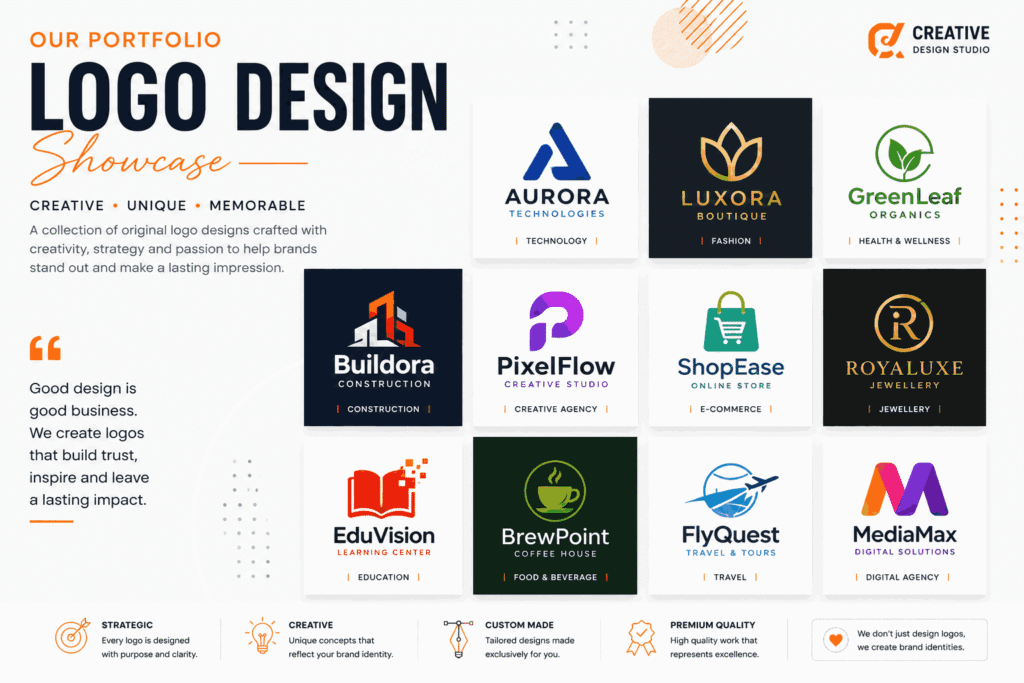
The first and most critical step in evaluating any graphic designer company is examining their portfolio. Think of a portfolio as a designer’s visual resume—it tells you exactly what they’re capable of creating.
What you should look for:
- Diversity of design styles: A good graphic designer company should demonstrate versatility across different industries and design categories (logos, branding, web design, packaging, social media graphics, etc.)
- Quality of execution: Look beyond flashy effects. Pay attention to typography, color theory, spacing, and overall visual harmony
- Client industry range: Has the graphic designer company worked with businesses similar to yours? While experience in your exact industry is valuable, adaptability across sectors shows true design expertise
- Evolution of work: Check if their recent projects show growth and improvement compared to older work. This indicates continuous learning and refinement of skills
Real-world example: Imagine you’re a e-commerce startup looking for a complete branding solution. A graphic designer company with experience in retail, SaaS, and consumer goods will bring diverse perspectives to your project. They’ll understand color psychology for retail, minimalism for tech, and lifestyle appeal for consumer products—all valuable insights that strengthen your brand identity.
Many businesses make the mistake of choosing a graphic designer company solely based on one or two impressive projects in their portfolio, without considering whether that work represents their consistent quality level or a one-off achievement. Always ask for multiple examples of similar work before committing.
Questions to Ask About Portfolio Work
- “Can you show me 5-10 recent projects similar to what I need?”
- “What was your role in creating this work?”
- “Are these projects still live and functional?”
- “Can you provide testimonials from these clients?”
2. Verify Credentials, Certifications, and Industry Experience
Beyond the Pretty Pictures
While a stunning portfolio is important, a qualified graphic designer company should also have proper credentials and demonstrated expertise. In 2026, professional certifications and industry recognition matter more than ever, as they indicate commitment to quality and staying current with design trends.
Key credentials to look for:
- Design education: Look for team members with degrees in graphic design, visual communication, or related fields from accredited institutions
- Industry certifications: Adobe Certified Professional, Google UX Certificate, or certifications from recognized design associations
- Awards and recognition: Has the graphic designer company won design awards? Industry recognition from reputable organizations validates their expertise
- Years of experience: A graphic designer company with 5+ years in the industry has navigated multiple design trends, client challenges, and market changes
Industry-specific experience matters. If you’re in the healthcare sector, you want a graphic designer company familiar with HIPAA compliance, medical imaging standards, and healthcare marketing regulations. If you’re launching a fintech app, they need to understand regulatory compliance and user experience in financial technology.
Pro tip: Don’t just ask about credentials—ask for evidence. Request links to industry awards, verification of certifications, and case studies that demonstrate their approach to problem-solving.
Building Trust Through Transparency
A reputable graphic designer company will be transparent about who’s working on your project. They’ll introduce you to your account manager, design lead, and other key team members. If a company is vague about “who will actually design your project,” that’s a red flag.
Companies like Logo Designer India have built their reputation by being transparent about team qualifications and maintaining consistent quality across all projects, regardless of size or scope.
3. Evaluate Communication Style and Project Management
Design is a Collaborative Process
One of the most underestimated aspects of selecting a graphic designer company is their communication approach. Even the most talented designer will disappoint you if they don’t listen to your needs or keep you informed throughout the project.
What effective communication looks like:
- Initial consultation: The graphic designer company asks detailed questions about your brand, target audience, competitors, and project goals
- Regular updates: You receive progress updates without having to chase them. Most professional companies provide milestone updates at defined intervals
- Revision process: The company has a clear process for revisions and change requests, typically with a defined number of revision rounds included in your package
- Responsiveness: They reply to your emails and messages within 24-48 hours during business days
- Documentation: Everything is documented in writing—project scope, timelines, deliverables, revision rounds, and payment terms
Red flags in communication:
- Vague initial meetings where they don’t ask about your business
- Disappearing after you’ve paid, with poor follow-up
- Pushing back aggressively against your feedback
- Making changes without confirming with you first
- Missing deadlines without explanation or updates
Project Management Tools Matter
In 2026, most professional graphic designer company teams use project management tools like Asana, Monday.com, Trello, or Basecamp. These tools allow you to:
- Track project progress in real-time
- See revision history
- Exchange feedback in an organized manner
- Access all deliverables in one location
- Have a clear timeline and deadline visibility
If a graphic designer company is still communicating solely through email without any structured project management system, consider whether they’re truly equipped to handle larger or more complex projects.
4. Understand the Design Process and Methodology
Not All Design Approaches Are Created Equal
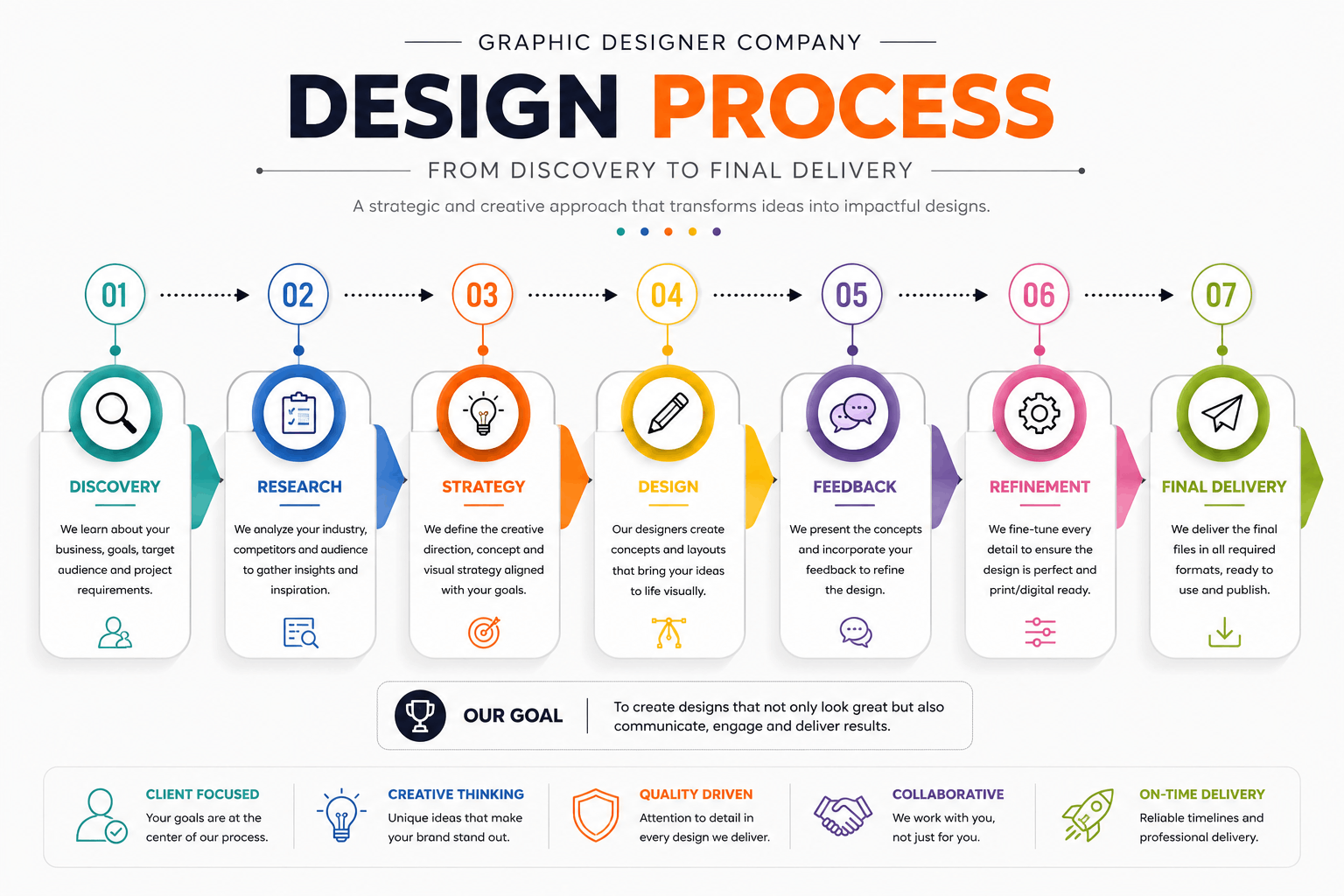
A significant factor that separates professional graphic designer company teams from amateur designers is their structured design process. Ask your potential partner about their methodology.
What a solid design process includes:
Phase 1: Discovery and Research
- Briefing meeting and detailed questionnaire
- Competitor analysis
- Target audience research
- Market analysis
- Strategy documentation
Phase 2: Concept Development
- Brainstorming and ideation sessions
- Mood boarding
- Multiple concept directions (typically 2-4 concepts)
- Presentation and feedback gathering
Phase 3: Refinement
- Refining the selected concept based on feedback
- Color palette development
- Typography selection
- Layout variations
Phase 4: Finalization
- Final revisions and quality assurance
- Format specifications (file types, sizes, resolutions)
- Delivery of all assets
Phase 5: Post-Launch Support
- Answering questions about asset usage
- Creating additional variations if needed
- Consulting on implementation
Why this matters: A graphic designer company with a defined process ensures consistency, professionalism, and predictable outcomes. You’re not relying on inspiration or luck—you’re getting a structured approach that has proven successful.
Professional firms like Logo Designer India follow comprehensive design methodologies that ensure every project, from a simple logo to a complete branding package, receives the same strategic attention and quality control.
For more information check this blog on 20 Graphic Design Tips to Enhance Your Visual Content
5. Check References, Testimonials, and Client Success Stories
Social Proof Speaks Volumes
In an age where anyone can claim to be a designer, verified testimonials and client references are invaluable. A legitimate graphic designer company should be able to provide:
Client references:
- Contact information for 3-5 recent clients who have agreed to discuss their experience
- Permission to reach out and ask detailed questions about the project
Online testimonials:
- Google Reviews, Clutch.co, or industry-specific review platforms
- Testimonials on their website (with client names and business details)
- Case studies that include client results and project metrics
Social proof metrics:
- Number of completed projects
- Years in business
- Client retention rate
- Team size and credentials
- Industry awards and recognition
What to ask in reference calls:
- “How smoothly did the project run from start to finish?”
- “Was the final product what you envisioned?”
- “How was communication throughout the project?”
- “What would you change about working with this company?”
- “Would you hire them again? Would you recommend them?”
- “How did the pricing compare to your expectations?”
Beware of Fake Reviews
Unfortunately, some graphic designer company websites display fabricated reviews or testimonials. Look for:
- Verified badges from Google, Trustpilot, or Clutch
- Specific project details in testimonials (vague praise is suspicious)
- Client names and business names you can research
- A mix of positive and constructively critical reviews (all perfect 5-star reviews are suspicious)
Real testimonials often mention specific challenges overcome or outcomes achieved. For instance, a genuine testimonial might say: “Logo Designer India transformed our brand identity. Our logo refresh increased website click-throughs by 34% within three months, and our new color palette perfectly appeals to our target demographic.”
6. Clarify Pricing Models and Get a Detailed Proposal
Understanding Design Pricing in 2026
One of the most confusing aspects of hiring a graphic designer company is understanding pricing. Design costs vary dramatically based on scope, complexity, revisions, and the company’s experience level.
Common pricing models:
Project-Based Pricing:
- Fixed price for a specific deliverable (e.g., “Logo design package: $800-$2,500”)
- Best for: Small, well-defined projects
- Advantage: Clear budget and no surprises
- Disadvantage: May not account for additional revisions
Value-Based Pricing:
- Price based on the value delivered to the client’s business
- Best for: Strategic, high-impact projects
- Advantage: Aligns designer’s success with client’s success
- Disadvantage: Requires detailed discussion of business goals
What a Detailed Proposal Should Include
A professional graphic designer company will provide a written proposal that specifies:
- Scope of work: Exactly what will be delivered
- Timeline: Start date, milestones, final delivery date
- Revision rounds: Number of revision cycles included
- Pricing breakdown: Clear cost for each deliverable
- Payment terms: Deposit amount, payment schedule
- Ownership: Who owns the final designs and source files?
- Exclusions: What’s NOT included in the project
- Terms and conditions: Cancellation policies, late payment fees, etc.
Red flags in pricing:
- Extremely low prices compared to competitors (often indicates low quality or inexperience)
- Vague pricing with “and more” statements
- Quotes that change constantly without explanation
- Unwillingness to provide a written proposal
- Expecting full payment upfront for large projects
A reputable graphic designer company in India, like Logo Designer India (with over a decade of combined experience), offers transparent pricing with detailed breakdowns, making the investment clear and justified.
7. Assess Long-Term Partnership Potential and Support
Design Isn’t a One-Time Transaction
Many businesses treat design as a one-off project: “Create my logo, and we’re done.” However, the most successful approach involves viewing your graphic designer company as a strategic partner invested in your long-term brand success.
Questions to evaluate partnership potential:
- Growth scaling: If your business grows, can this company scale with you? Can they handle larger, more complex projects?
- Ongoing support: Will they be available for revisions, new assets, and brand evolution?
- Retainer availability: Do they offer ongoing design support packages?
- Communication channels: Can you easily reach them for quick questions or urgent requests?
- Brand ownership: Do they maintain organized records of your brand assets for easy access
Common Mistakes to Avoid When Hiring a Graphic Designer Company
Mistake #1: Choosing Based Solely on Price
The cheapest option is rarely the best option. A “deal” that costs $150 for a logo might save you money upfront but cost you thousands in lost business due to poor brand perception. Professional graphic designer company services represent a strategic investment in your brand’s market position.
Mistake #2: Underestimating the Importance of Chemistry
You’ll be working closely with this company, possibly for months or years. If you don’t communicate well or feel understood in initial conversations, that disconnect will compound throughout your project.
Mistake #3: Not Providing Adequate Feedback
Designers aren’t mind readers. If you want specific changes, articulate them clearly. The most collaborative graphic designer company relationships succeed when clients actively participate in the creative process.
Mistake #4: Hiring Purely Based on Trend-Chasing
Just because a design trend is popular doesn’t mean it’s right for your brand. A good graphic designer company will guide you toward timeless design that works for your specific audience, not what’s trending on Instagram.
Mistake #5: Changing Requirements Mid-Project
Scope creep—continuously adding new requests after the project has started—causes delays and frustration. Clear initial requirements and a structured change request process prevent this.
Mistake #6: Not Discussing Ownership and Rights
Always clarify who owns the final designs and source files. Some designers retain ownership; others grant full rights to the client. This should be spelled out in your contract before work begins.
How to Work Effectively With Your Chosen Graphic Designer Company
Once you’ve selected your graphic designer company, these practices ensure the best possible outcome:
Before the Project Starts
- Create a detailed brief: Provide background on your company, target audience, competitors, brand values, and project goals
- Share reference materials: Collect 5-10 designs you like (in any industry) and explain why they appeal to you
- Define success metrics: What does success look like? More engagement? Better brand recognition? Clear conversions?
- Establish communication preferences: How often will you meet? Which channels (email, Slack, video calls) will you use?
- Set clear expectations: Discuss timeline, revision limits, and decision-making processes
During the Project
- Be responsive: Reply to emails and provide feedback within agreed timeframes
- Give constructive feedback: Instead of “I don’t like it,” explain what specifically doesn’t work and why
- Avoid scope creep: If you want to add new elements, discuss the impact on timeline and budget
- Trust the process: Designers have training and expertise. Don’t immediately dismiss their recommendations
- Document decisions: Keep written records of agreed-upon changes and approvals
After the Project
- Provide testimonials: If you had a great experience, share your feedback on Google Reviews or the company’s website
- Maintain the relationship: Even after the project ends, a good relationship can lead to future collaborations
- Implement thoughtfully: Don’t make changes to their designs without consulting them
- Share results: Tell them how the designs performed in the market—this feedback helps them improve
The ROI of Professional Graphic Design
Why Professional Design Matters Financially
Investing in professional graphic designer company services isn’t an expense—it’s an investment that typically delivers measurable returns:
Brand Recognition: Companies with professional, cohesive visual identities are 80% more likely to be remembered by customers.
Credibility and Trust: Professional design signals legitimacy. Customers are more likely to trust businesses with polished, professional visual branding.
Conversion Rates: Studies show that professional design can improve conversion rates by 25% or more by making websites and marketing materials more appealing and user-friendly.
Employee Pride: Employees feel more proud working for companies with strong visual identities, improving morale and retention.
Competitive Advantage: In crowded markets, superior design differentiates you from competitors using generic, amateur-looking materials.
Cost Efficiency: Professional designs are reusable across multiple channels (print, web, social media), extending the value of your investment.
For most businesses, the return on investment from professional branding typically manifests within 6-12 months through improved customer acquisition, higher retention rates, and premium pricing opportunities.
Conclusion: Making Your Final Decision
Selecting the right graphic designer company is one of the most important decisions you’ll make for your brand. By following these seven proven tips, you’ll dramatically increase the likelihood of finding a partner who understands your vision, delivers exceptional results, and supports your growth.
To recap, remember to:
- ✓ Review diverse, high-quality portfolios
- ✓ Verify credentials and industry experience
- ✓ Evaluate communication style and responsiveness
- ✓ Understand their design methodology
- ✓ Check references and client testimonials
- ✓ Get detailed, transparent proposals
- ✓ Assess long-term partnership potential
The best graphic designer company for your business isn’t necessarily the biggest or the most expensive—it’s the one that best understands your goals, communicates effectively, and delivers consistent quality.
Ready to transform your brand with professional design?
Consider partnering with Logo Designer India, a trusted graphic designer company specializing in custom branding, logo design, and complete visual identity solutions for businesses of all sizes. With a proven track record of delivering exceptional results and transparent, client-focused service, they’re dedicated to bringing your brand vision to life.
Contact them today:
- Phone: 9854661818
- Website: logodesignerindia.in
- Get a free consultation and custom proposal for your project
Whether you need a logo redesign, complete branding overhaul, or ongoing design support, Logo Designer India combines strategic thinking with creative excellence to deliver designs that don’t just look beautiful—they drive real business results.
Your brand deserves the best. Schedule your consultation today and take the first step toward a visual identity that truly represents your business’s potential.
Frequently Asked Questions About Hiring a Graphic Designer Company
Q1: How much should I budget for hiring a professional graphic designer company?
A: Budget depends on project scope and your location. In India, professional graphic designer company services typically range from ₹15,000-₹100,000+ for comprehensive projects. A simple logo might cost ₹10,000-₹25,000, while complete branding packages (logo, business cards, letterhead, brand guidelines) range from ₹50,000-₹150,000+. International rates are significantly higher. Remember, the cheapest option isn’t always the best—prioritize quality and track record. Reputable firms like Logo Designer India offer transparent pricing with detailed breakdowns, making budget decisions clearer.
Q2: How long does a typical graphic design project take with a professional company?
A: Timeline varies by scope. A simple logo design project typically takes 2-4 weeks from start to finish. Complete branding packages (logo, color palette, typography, style guide) usually require 4-8 weeks. The timeline includes discovery, concept development, revisions, and finalization. When choosing a graphic designer company, ask about their standard timelines for your specific project type. Avoid companies that promise designs in a few days—quality design requires time for research, conceptualization, and refinement.
Q3: What files and formats should I receive from my graphic designer company?
A: You should receive a comprehensive package including:
- Vector files (AI, EPS, SVG) for unlimited scalability
- High-resolution raster files (300 DPI PNG, JPG for print)
- Web-optimized versions (72 DPI, compressed for fast loading)
- Presentation document showing your final designs
- Brand guidelines document with usage specifications
- Organized folder structure with clear naming conventions
A professional graphic designer company won’t just email final JPGs—they’ll provide a complete, organized asset library ready for various applications.
Q4: What’s the difference between a freelance designer and a graphic designer company?
A: Freelancers work independently and are often more affordable, with flexible schedules. However, they may disappear after a project, have limited availability during busy periods, and lack the infrastructure for large projects. A graphic designer company offers:
- Team of specialists (designers, strategists, project managers)
- Structured processes and quality control
- Backup if your main contact is unavailable
- Ability to scale to larger projects
- Professional infrastructure (project management tools, asset management systems)
- Long-term relationship and ongoing support
For most businesses, a professional graphic designer company provides better reliability and results.
Q5: How do I know if a graphic designer company is using AI to generate my designs instead of creating original work?
A: This is an increasingly important question in 2026. Ask directly: “Will my designs be 100% original, custom work?” Get this commitment in writing. Also:
- Request the design process documentation
- Ask about their methodology (research, concept development, etc.)
- Review their portfolio for consistent quality and style evolution
- Ask for source files showing design layers and refinements
- Check references to confirm custom work was delivered