Luxury Brand Logo Design India: A Practical Guide (2027)
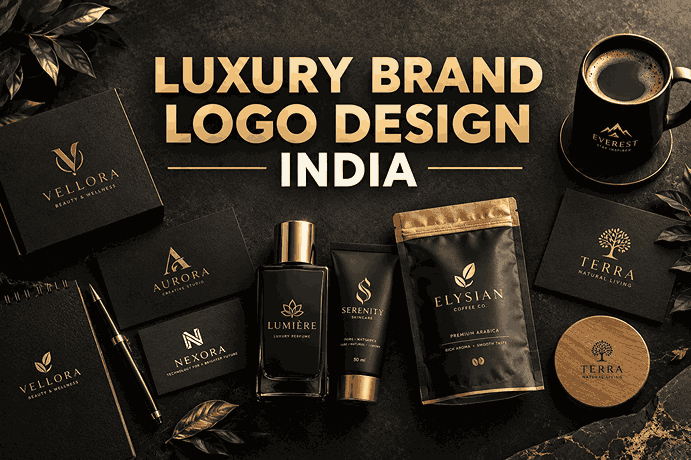
A luxury logo feels premium because of restraint, custom lettering and consistency across every surface it touches, not because of gold foil or ornate crests. In luxury brand logo design in India, three further decisions carry just as much weight: whether the mark needs an Indian-script version, which trademark classes will protect it, and whether your contract actually gives you ownership. This guide is for founders and marketing leads at premium Indian brands, from jewellery and fashion to fragrance, hospitality and gourmet food. It covers what makes a logo read as luxury, what the industry learned from the sans-serif trend, how Indian scripts change the brief, how to protect the finished logo, and how to brief and judge a designer. What makes a logo feel luxury Writers who work with high-end brands agree on a short list of traits. One widely shared set of rules comes from the creative director of the agency Relevance, writing in The Drum. The points below draw on it, alongside standard design practice. Treat them as a starting point, not a formula. Restraint and space In this category, minimalism signals confidence. Luxury marks usually skip descriptor lines, mascots and playful illustration, which suit mass-market and technology brands better. Space around the mark matters as much as the mark itself. A simple test: remove one element at a time. If the logo still identifies the brand, the element you removed was decoration. Typography does most of the work Most luxury logos are type-led. The face may be a quiet sans, a refined serif or a classical script, but the letters are usually redrawn so they belong to the brand alone. The practical lesson: if a designer simply sets your name in an installed font, the result will look familiar. Ask for custom or modified lettering, with spacing checked at every size. Monograms and symbols A monogram is a compact version of the main mark. It works on small surfaces such as a clasp, a bottle cap, a packaging seal or the arm of a pair of sunglasses, and it can grow into a repeat pattern (The Drum cites Fendi’s “F”). Plan the system, not just the logo: a primary wordmark, a monogram for small spaces and, if the brand will use one, a pattern. Colour and finish Luxury logos are most often black, white or dark grey, with any signature colour applied to the wider identity rather than the logo itself. The Drum points to Hermès orange as an example. Design the logo in one colour first. Then check how it behaves when foil-stamped, embossed, engraved, embroidered or woven, because fine hairlines that look elegant on screen can clog on those surfaces. Minimal or heritage? What the sans-serif era taught luxury brands From around 2018, many fashion houses, including Balenciaga, Saint Laurent, Balmain and Burberry, replaced distinctive wordmarks with simple sans-serif ones. The logic was practical: plain letterforms scale more easily across screens and products, as Monocle reports. The side effect was sameness. Burberry returned to a serif wordmark and its equestrian knight emblem in 2023, and Monocle notes that Bottega Veneta and Salvatore Ferragamo also went back to serif type. Its argument is that serif lettering carries history, leaves more room for differentiation, and stays legible at small sizes. The lesson for Indian brands is not “choose serif.” It is that distinctiveness is the job of a logo, and that stripping out character to look global can cost you what makes you recognisable. A simple way to apply it: Your situation Direction to explore Genuine history: a family firm, a craft lineage, a historic address Mine the archive for old lettering, signage and labels. Reinterpret it; don’t copy it A newer brand positioning itself as premium Build distinctiveness through custom lettering and one ownable detail. Don’t invent a heritage you can’t document, because an “Est.” line or a crest has to be true Mostly sold online or on mobile Design a simplified monogram that holds at app-icon and favicon size alongside the full mark A final check: place your draft next to five competitors. If you could swap the names and nobody would notice, the design is not yet doing its job. Designing for India: scripts, symbols and audiences Indian-script and bilingual logos Many premium Indian brands now pair or replace Latin lettering with Devanagari and other scripts. One Indian fashion retailer’s design blog observes that lifestyle and luxury brands are using Devanagari to signal authenticity and local pride. It is a design decision, not decoration, and it is easy to get wrong. Specialists exist: Indian Type Foundry lists a custom Devanagari logotype it made for Starbucks, and WhiteCrow focuses on custom typefaces across Indian scripts, including Devanagari, Gujarati, Tamil, Telugu, Kannada and Bangla. If your logo needs a second script: Using heritage motifs without cliché Indian craft and architecture offer a deep visual vocabulary, but a generic “Indian” motif added to a logo rarely helps a brand. Draw instead from the brand’s own story: the material, the technique, the founder’s name, the place. Decorative motifs usually sit better in a supporting pattern than in the primary mark. One commentator quoted by The Established points to Sabyasachi’s logo-bearing accessories as India’s standout example of a logo with commercial pull, and stresses introducing a logo with longevity in mind. Whatever you choose should still look right in ten years. Protect the logo before launch: trademark and ownership This section is general information, not legal advice. Have a trademark attorney or IP lawyer confirm the details for your case. Trademark classes luxury brands usually need In India, trademarks are registered for specific goods and services grouped into the 45 Nice classes, under the Trade Marks Act, 1999 and the Trade Marks Rules, 2017, administered by the Trade Marks Registry. A brand that sells across categories needs to cover each one. Common classes for luxury goods: Class Covers Typical luxury use 3 Cosmetics and perfumes Fragrance, skincare 14 Jewellery and watches Fine jewellery, timepieces 18 Leather goods,
Logo Design for Packaging and Labels in India: What to Plan Before You Brief a Designer 2027
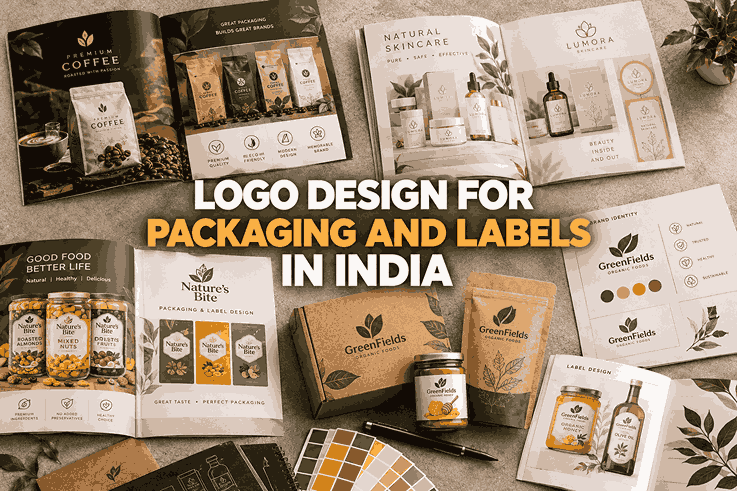
A logo that looks sharp on a website can fall apart on a 50 g pouch. Fine lines fill in during printing, a pale wordmark disappears on a metallic film, and the space you set aside for your brand turns out to be shared with an FSSAI logo, a veg/non-veg symbol, an MRP declaration and a barcode. The short answer: logo design for packaging and labels in India means designing a logo system, not a single file. It has to hold up in print at small sizes, on real materials, and alongside the information Indian regulations require on a pack. Plan three things before you brief anyone: the logo versions you need, the print conditions, and the space that regulatory information will take. Then protect the result with a trademark search and a written copyright assignment. This guide walks through each of those, so that whether you hire a logo design agency, a freelancer or an in-house designer, you can brief them properly and check their work. Why a packaging logo is a different brief from a website logo On a screen, a logo is usually seen large, on a white or flat background, and can be tweaked in minutes. On a pack, it is printed once on a batch, often in thousands of units, and then it is stuck with. Three things change: A brief that only says ‘we need a logo’ misses all three. A brief that says ‘we need a logo system that works on our packs and labels’ does not. The packaging-ready logo checklist Build a small family of logo versions One master logo is rarely enough. Ask for a family that typically includes: Ask the designer to show where each version is meant to be used, so your team and your printer do not have to guess. Set a minimum size and test it Every logo has a size below which it stops working. Ask for a stated minimum width (in millimetres) for each version, and print it at that size on a desktop printer or proofing sheet before you approve it. Thin strokes, tiny counters and a tagline set in light type are the usual casualties. Decide colour and print process early Tell the designer how the pack will be printed before they pick colours. Your printer can advise whether the job is run in CMYK, with spot colours, or a mix, and whether special finishes such as foil or embossing are planned. A gradient that looks lovely on screen may be difficult or costly in a one- or two-colour print run, so ask for a flat-colour fallback version. Test on the real material Ask the printer for a proof, or at least a mock-up on the intended substrate. Contrast changes on kraft paper, transparent film and metallised pouches. A logo that works on white may need a different colour variation to stay readable on a coloured or textured pack. What shares your pack: label information required in India This is where many logo projects go wrong: the brand mark is designed in isolation, and the mandatory information is squeezed in afterwards. The list below is a design-planning summary, not legal advice. Always check the current text of the regulations, or ask a compliance professional, for your product category. Packaged food: FSSAI logo, licence number and veg/non-veg mark For pre-packaged food, the Food Safety and Standards (Labelling and Display) Regulations, 2020 set what the label must carry. For layout purposes, the points that most often affect a logo are: In practice, your logo, product name and the veg/non-veg mark will often compete for the same front-panel space, so plan the layout together rather than adding the symbol at the last minute. The regulations also set minimum sizes that depend on the package area, so get the exact figures from the notified text. Packaged commodities: Legal Metrology declarations Beyond food rules, retail packs in India fall under the Legal Metrology (Packaged Commodities) Rules, 2011. The declarations under Rule 6 include the name and address of the manufacturer, packer or importer, the common or generic name of the commodity, the net quantity, the month and year of manufacture or packing (or import), the maximum retail price inclusive of all taxes, and consumer care details. Imported goods need a country-of-origin declaration as well. Some of these declarations must appear on the principal display panel, and the rules prescribe how they are made, including minimum character heights that depend on the panel area. For a designer, this means the declaration block is a fixed-size element in the layout, not decoration that can shrink to fit the logo. Front-of-pack warning labels: leave room to adapt Front-of-pack nutrition labelling is still evolving. As of late September 2026, reports indicate that FSSAI has proposed a single-phase rollout of front-of-pack labelling for foods high in salt, sugar or fat, and the Supreme Court has been reviewing the framework. A final framework had not been settled in the sources I reviewed. If you sell packaged food, avoid a front panel so tight that a future warning label cannot fit. Check FSSAI’s website for the current status before finalising artwork. Other product categories Cosmetics, pharmaceuticals, electricals, toys and other categories can have their own labelling requirements. I have not covered those here. Ask your compliance advisor or the relevant regulator which declarations apply to your product, and give that list to your designer at the start. Designing logos for multilingual labels Many Indian brands print in English plus one or more regional scripts. If your pack needs another script, tell the designer at the start, because Devanagari, Tamil, Telugu, Bengali and other scripts have different proportions, stroke weights and line heights than Latin type. Two practical points. First, if the logo itself contains words, decide whether you need a matching version in a second script, and have the designer produce it rather than substituting a font. Second, have a native reader proofread any text on the label before print. A designer who does
Logo Redesign Service in India: A Practical Guide to Updating Your Logo Best In 2026
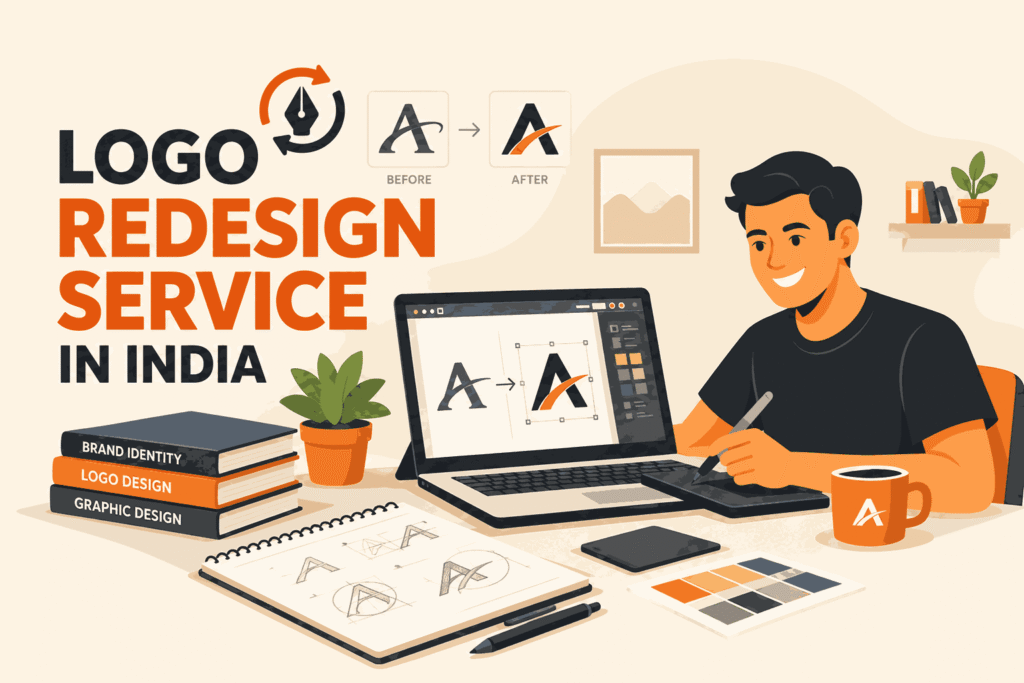
A logo redesign service updates the visual identity you already have so that it fits the business you have become. In India, that usually means a designer, studio or design company reviews your current logo, develops new directions, and hands over final files you can use on signage, packaging and screens. A good redesign changes what needs to change and keeps what customers already recognise. Before you hire anyone, three decisions matter more than the artwork itself: whether you need a redesign at all, how to protect your trademark and ownership rights, and how to choose someone who can show a clear process. This guide takes each in plain terms, so you can brief a designer with confidence. Logo Redesign Service in India can help you efficiently. What Is a Logo Redesign Service? A logo redesign service starts from an existing logo, unlike a first-time logo project where nothing exists yet. The designer has to respect what the old logo already does for you. Customers may know its colours, its shape or the way your name is written, and your invoices, boards and packaging carry it today. Providers use different words for similar work. You may see logo redesign, logo refresh, logo revamp and rebranding on the same menu. The terms overlap, so ask what the work involves before you compare quotes. Refresh, redesign or rebrand: which one do you need? Option What changes Typical trigger Risk to recognition Logo refresh Same idea, cleaner execution: tidier lines, updated colours or lettering The logo looks dated or breaks down at small sizes Low Logo redesign A new logo concept for the same business; some elements may carry over The business has grown, repositioned or outgrown the old mark Medium Rebrand Positioning, messaging and visual identity, usually including the logo A change of direction, a new audience or market, a merger High, but planned A rebrand is wider than a logo change: it alters how the whole business is positioned and presented. If your strategy is changing along with your look, you want a brand identity designer in India rather than a logo-only service. If the business itself has stayed the same, a refresh is often enough. Signs It May Be Time to Redesign Your Logo The strongest reasons are practical: Weaker reasons include boredom or a single negative comment. Small-business advisers such as SCORE say rebranding makes most sense when a company has changed significantly, and Adobe warns that changing your look too often risks confusing your audience. Before you commit, ask one question: what problem will a new logo solve? If the real issue is unclear pricing, weak marketing or inconsistent service, a new logo will not fix it. What a Logo Redesign Service in India Usually Includes Scope varies by provider, so get the list in writing. A thorough service typically covers four stages. An audit of your current logo The designer looks at where your logo appears today, what customers associate with it, and what works or fails. Expect questions about your audience, your competitors and where the business is heading over the next few years. Concepts and refinement You see one or more design directions, give feedback, and the chosen concept is refined. Ask how many concepts and revision rounds are included, and what counts as an extra round. Do not rely on verbal promises here. Final files and usage guidelines You should receive vector artwork (formats such as SVG, AI, EPS or PDF) plus ready-to-use PNG or JPG versions. Look for full-colour, one-colour and reversed versions, and a short guide to colours, fonts, spacing and common misuse. Vector files let the logo scale from a visiting card to a hoarding without losing quality. Rollout support Some providers also help update stationery, social profiles, packaging and signage. Others stop at delivering files. Neither is wrong, but know which one you are buying. Protect What You Already Have: Recognition, Trademark and Copyright Most redesign guides skip this part. In India it can matter as much as the artwork. What follows is general information, not legal advice. Keep what customers already recognise Years of use build recognition: a colour, a shape, a way of writing your name. Unless you are deliberately breaking from the past, keep at least one familiar element and let the logo evolve. Tell customers about the change, so a new look reads as progress rather than a different business. If your current logo is a registered trademark A logo can be registered as a trademark under the Trade Marks Act, 1999, and applications are filed through the IP India portal. Section 59 lets the registered owner apply to the Registrar for leave to add to or alter a registered mark, but only in ways that do not substantially affect its identity. A tidy-up of lines or spacing may fit that. A new concept probably does not, and would generally mean a fresh application for the new logo. Whether a change counts as substantial is a legal judgement. Ask a trademark attorney before the design is finalised, not after you have printed it. Registrations run for ten years and need renewal, so also ask what to do with the old registration during the changeover. If you have never registered your logo, a redesign is a sensible moment to search the trademark register for similar marks before you commit to a design. Who owns the new logo? Under Section 19 of the Copyright Act, 1957, an assignment of copyright is valid only if it is in writing and signed by the person assigning it, which here is the designer. The document must identify the work and state the rights assigned, the duration and the territory. If the duration is not stated, the law deems it to be five years. If the territory is not stated, it is presumed to be India only. Section 19(4) can also treat assigned rights as lapsed if they are not exercised within a year, unless the agreement says otherwise. So “the
How to Choose a Logo Designer for Your Business: A Practical Guide for India 2026
A logo looks like a design purchase, but you are really hiring someone to understand your business, turn it into a mark that works on a signboard and a phone screen, and hand over files you can legally use for years. That is why how you choose a logo designer matters more than which style you like on day one. In short: choose the designer whose portfolio shows range, who asks about your customers before sketching, who puts scope, price and timeline in writing, and who delivers editable files along with a signed transfer of rights. The rest of this guide shows how to check each point, whether you are comparing freelancers in your own city or a logo designer in India you will only ever meet on video calls. The six checks that matter most Step 1: Decide what you need before you contact anyone You will get better quotes and better work if you know which of three jobs you are hiring for. A logo only A mark, a wordmark, or both. This suits you if your name, colours and tone are already settled and you do not need guidelines or printed material. A logo inside a brand identity If you are launching or rebranding, a logo alone often leaves gaps: which colours go with it, which fonts, how it sits on packaging, a brochure or a social media profile. In that case look for a brand identity designer in India rather than a logo-only designer. An identity project usually covers the logo plus a colour palette, typography, usage rules and applications such as stationery and social media. It costs more time and money than a logo alone, so decide this before you ask for quotes. Some studios, including Logo Designer India, list these related services (brochures, packaging, stationery, social media design) alongside logo design. A logo maker or AI tool An online logo maker can be reasonable for a side project, a one-off event or a placeholder while you test an idea. The trade-offs are practical: template-based results can resemble what other businesses end up with, you rarely get the thinking behind the symbol, and licence terms differ from tool to tool. Ready-made logos are not necessarily exclusive unless you pay for exclusivity, so read what the tool says about commercial use. Searches such as “logo maker in India” or “logo maker near me” mostly return these tools and local print shops. If the logo will sit on your signage, packaging and website for years, a custom designer is usually the safer route. Step 2: Freelancer, studio or agency: which suits you? There is no universally right answer. Match the provider to the size of the job. Freelance designer Studio or agency Logo maker or AI tool Best for Startups, small shops, a single logo Rebrands, multi-location businesses, full identity systems Placeholders, personal projects, event logos What you get Direct contact with the person designing A team that may include a strategist, designers and a project manager Instant templates you customise yourself Watch for Limited availability, no backup if they disappear mid-project More layers between you and the designer, and a process that may be heavier than you need Similar-looking results, unclear exclusivity, little custom thinking Ask “Will you personally design this?” “Who will design it, and can I speak to them?” “Can I use it commercially, and is it exclusive?” Size is not a quality guarantee. A logo design agency in India may have an impressive client list and still hand your project to a junior designer, while an independent freelancer may produce stronger work. Likewise, a logo design company in India that offers one fixed package may fit a simple job well and a complex rebrand badly. Judge the work and the process, not the label. Step 3: Read a portfolio like a client A portfolio shows what a designer has done, not what they will do for you. Read it with these checks: This applies equally when you compare logo designers in India through directories such as GoodFirms, DesignRush or Contra. Listings are a starting point; the checks above are what separate candidates. Step 4: Questions to ask before you hire You can learn more from a 20-minute call than from a portfolio. Ask: Notice how they answer, not only what they say. A designer who asks you questions back is usually someone who will ask them during the project too. Step 5: Know what a complete handover includes Many people discover after payment that they have one image file and no way to use it on a banner or a stamp. A usable logo package normally includes: Exact formats vary by designer, and some charge extra for source files or additional versions. Get your list confirmed in writing before work starts. If you need Marathi, Hindi or another Indian-language script in the logo, ask to see earlier bilingual work, because lettering in two scripts is a separate skill from English typography. Step 6: Get ownership in writing This is the step most “how to choose” guides leave out, and in India it deserves attention. This section is general information, not legal advice. If the logo is central to your business, have a lawyer review the agreement. Copyright: the assignment Under the Copyright Act, 1957, the author of a work is generally its first owner, subject to exceptions such as work made in the course of employment. So paying a freelancer does not automatically make you the owner. Moving ownership to you is an assignment, and Section 19(1) says an assignment is valid only if it is in writing and signed by the assignor. In practice: Trademark: check before you commit Copyright and trademark are different things. Owning the artwork does not mean no one else uses a similar mark in your field. Before you approve a final logo, search the free public database at tmrsearch.ipindia.gov.in. It offers word, phonetic and Vienna-code (logo element) searches, and the Vienna-code option is the one that
How to Choose the Best Logo Design Company in India 2026
There is no official ranking of the best logo design company in India. Most “top 10” lists are directories sorted by listing, self-reported data or advertising, so they tell you who is visible, not who is right for you. A better approach is to judge each company against criteria that predict a good result: relevant work, a clear process, usable files, written ownership terms and a design that has been checked against existing marks. This guide walks through those criteria in the order you will meet them: which type of provider to hire, what to check before you pay, and the Indian copyright and trademark points that buyers often discover too late. It is published by Logo Designer India, a Pune-based design agency, so read our own section near the end as one option to evaluate, not a verdict. What “best” means when you hire a logo design company in India The short answer The best logo design company in India for your business is the one that: Awards, office size and price matter less than these four. A cheap logo you cannot legally own or print is expensive, and a premium quote that does not list deliverables is a risk too. Logo or brand identity? A logo is one asset. A brand identity is the system around it: colour palette, typography, spacing and usage rules, plus stationery, social media templates and packaging. If you only need a mark for a new shop, a logo project is enough. If you are launching several products, rebranding or entering new markets, look for a brand identity designer in India who also supplies brand guidelines, the document that tells everyone how the logo may and may not be used. Hiring guides note that very low-cost offers often leave out revision flexibility, usable file formats, brand guidelines or clarity on ownership (Logoworks). Check those four items whichever route you pick. Logo maker, freelancer or logo design agency in India: which fits? You have three realistic routes, and each suits a different situation. Route Best for Strengths Watch-outs Online logo maker (including AI tools) Placeholders, tight budgets, testing a business idea Fast, low cost, instant preview Shared templates and icon libraries can produce similar marks; check the licence, exclusivity and which files you can download Freelance designer Startups and small businesses with a simple brief Direct contact with the person designing; flexible scope Depends on one person’s availability; confirm file backups, aftercare and written ownership terms Logo design agency or studio Rebrands, multi-product brands, projects needing guidelines and collateral A team covering strategy, design and production; structured project management Usually a more formal process and higher cost; ask who will actually work on your project A logo maker in India is fine while you are still validating a name. Trouble tends to appear later, when the logo has to go on signage, packaging, embroidered uniforms or a trademark application, and the template turns out to be limited or not exclusive to you. For anything you plan to keep for years, a custom design from a freelancer or a logo design agency in India is the safer base. Choose a freelancer when your needs are simple and you want a direct line to the designer. Choose an agency when you need research, several specialists or a full identity with guidelines. Six practical checks before you hire 1. Portfolio relevance, not just polish Review at least a dozen pieces. Look for range: if every logo shares the same look, the company may be applying a formula instead of responding to each brief. Then check how the logos behave in use. Some designs look good in a gallery but fail on signage, embroidered apparel, mobile screens or one-colour printing, so ask to see applications as well as the final mark (Toucan Design makes the same point). 2. A defined process Ask the company to describe the steps between your brief and delivery. A sound process usually includes a discovery questionnaire or call, category and competitor research, sketches and concepts, a feedback round, refinement and final handover. Then pin down the numbers: how many concepts you will see, how many revision rounds are included and what counts as a new round. 3. Deliverables in writing “Logo files” is not a deliverable. Ask for a list, for example: If a company cannot provide the working vector file of your final logo, ask why. It may have been assembled from stock or template elements. 4. Timeline and revisions A logo timeline depends as much on how quickly you send feedback as on the designer’s speed. Ask for a schedule with dates and feedback windows instead of a single “delivery in X days” promise, and ask what happens if your needs change halfway through. 5. Pricing you can compare Logo pricing in India varies widely, and no figure means much without a scope. Profiles on DesignRush show self-reported average hourly rates for India-based agencies from about $15 to $150, which tells you a low quote is not automatically poor work and a high one is not automatically better. Compare like with like by asking for an itemised quote covering concepts, revision rounds, file formats, guidelines, usage rights and taxes, and ask for a proper invoice. 6. Communication and aftercare Find out who your point of contact is, how quickly they reply and whether you can get the files again, or request small edits, a year from now. These are the details that become expensive when nobody agreed on them. Two legal checks most buyers skip This section is general information, not legal advice. Have an IP lawyer review the agreement for any brand you intend to build for the long term. Who owns the logo you paid for? Under the Copyright Act, 1957, the author of a work is its first owner (Section 17). The exceptions include works made in the course of employment, where the employer is the first owner unless agreed otherwise, and certain commissioned works made for payment:
Top Logo Designers in India: How to Find and Choose the Best One in 2026
Search for top logo designers in India and you will find directories listing hundreds or even thousands of providers, and no obvious way to tell which one suits your business. There is a reason for that: nobody maintains an official ranking. The right designer for a neighbourhood café is not necessarily the right one for a fintech startup. So this guide does not hand you a list of names and call them the best. It shows you how to build your own shortlist: the types of providers, where to look, seven checks to run before you pay anyone, how logo ownership works under Indian law, and what moves the price. The short answer: pick the logo designer whose portfolio resembles your kind of business, whose process and files are written down before work starts, and who agrees in writing that the finished logo is yours. What “top logo designer in India” actually means There is no licence, register or official league table for logo designers in India. What you see in search results is a mix of directory rankings, agency self-descriptions and paid placements. Directories such as GoodFirms, Clutch and DesignRush are useful for finding candidates. They are also very different in size and criteria: on the dates shown on their pages they list roughly 4,800, 1,200 and 660 logo providers in India respectively. Some listings on these platforms are labelled sponsored or featured, so a high position can partly reflect marketing spend. Use directories to collect names, not to judge quality. Then judge each name on things you can check yourself: their work, their process and their paperwork. Which type of logo provider fits your business? Most people searching for a logo designer in India end up choosing between four routes. Option Best for Watch for Freelance logo designer Startups and small businesses that want to speak directly to the person designing Limited capacity, no backup if they are unavailable, usually a narrower scope beyond the logo Logo design agency or company Businesses that need the logo plus brochures, packaging or digital material, or have several decision-makers You may not work directly with the designer; process can be slower Brand identity designer New launches, rebrands, businesses with several products or branches Larger scope and budget; ask exactly what is included beyond the logo Logo maker or AI tool Testing an idea, a short-term project, a placeholder Check whether the icon is exclusive to you and what the terms say about ownership A freelancer and a logo design agency in India can both deliver excellent work. The difference is mostly in scope and working style, not in guaranteed quality. Choose a logo design company when the project is bigger than a single mark; choose a freelancer when you want a direct line to the designer and the job is contained. Logo maker in India: when a tool is enough The phrase “logo maker in India” covers two different things: software that assembles a logo from templates, and people who make logos. Tools can be reasonable for a one-off event, a side project, or a placeholder while you test whether a business idea works. If the logo will sit on packaging, signage, invoices and contracts for years, a custom design gives you more control over originality and rights. Whichever you choose, read what the tool or provider says about exclusivity and ownership before you pay. How to shortlist logo designers in India Seven checks before you hire a logo designer 1. A portfolio that resembles your project Look for consistent quality across several logos, not one standout. Check that the marks still work small (a social media avatar) and in a single colour. Ask the designer to explain the thinking behind two pieces; a good designer can. 2. A process they can describe A reliable process usually covers discovery, concept development, revisions and final files. If the answer is “I’ll send you something,” you are gambling, and unlimited rework is the usual result. 3. A written list of deliverables A logo is delivered as vector artwork, which scales to any size without blurring. Raster files such as PNG and JPG are exports for everyday use. A sensible hand-off includes vector formats (AI, EPS, SVG, PDF), PNG and JPG exports, and colour, black and white versions. Ask plainly whether the editable master file is included, because any later change depends on it. 4. Concepts, revisions and timeline in writing Agree how many initial concepts you will see, how many revision rounds are included, what counts as extra work, and the delivery dates. One quote may cover a single concept and a JPG; another may cover several concepts, vector files and a usage guide. Those are not the same product. 5. Ownership in writing Do not assume that paying for a logo transfers the rights. The next section explains why and what to ask for. 6. Originality and trademark awareness Ask how the designer checks that a concept is not too close to existing marks. A designer’s own check is useful but is not a legal trademark search; if the brand matters long term, a trademark attorney should run one. 7. Clear pricing and red flags Walk away, or at least slow down, if there is no contract, ownership is vague, pricing is unclear, the portfolio is only contest or personal work, or the designer will not explain their thinking. Who owns your logo in India? Paying for a logo and owning the copyright in it are not automatically the same thing. Under Section 17 of the Copyright Act, 1957, the author of a work is generally its first owner. There are exceptions, such as work made in the course of employment and certain commissioned works. The commissioned-work exception names specific kinds of work (photographs, paintings, portraits, engravings and cinematograph films), so a logo should not simply be assumed to fall under it. The safe route is a written assignment. Section 19(1) says an assignment of copyright is valid only if it
Minimalist Logo Design Service in India: How to Choose One and What You Should Own at the End
A good minimalist logo design service in India gives you one thing above all else: a simple mark that is still unmistakably yours. Not a default font typed onto a white canvas, but a logo where every line earns its place, that stays legible on a phone screen, a shop sign and a packaging label, and that you legally own when the project ends. This guide explains what the service should include, when a minimal logo is the wrong call, how freelancers, agencies and online logo makers compare, and the ownership and trademark steps that first-time buyers often skip. It is written for founders and small-business owners who are about to brief and pay a designer. What a minimalist logo design service actually includes Minimalism in logo design means removing everything that isn’t essential, then checking that what remains still says something about the business. That is harder than it sounds. A successful minimalist logo looks simple, but it isn’t simple to create, because the designer has to decide which single idea survives the edit. So the service you are buying is mostly thinking, not drawing. Before you agree to anything, ask for the following in writing: None of this is exotic. It is what a logo needs in order to work for years across a website, invoices, signage and packaging. If a quote lists only “3 logo options” and “JPEG,” you aren’t yet comparing like with like. When a minimalist logo is the right choice, and when it isn’t Minimal logos earn their keep when a mark has to appear in many places and sizes. Flat, simple designs transfer easily between a business card, letterhead and a mobile app icon, which is one reason so many brands have moved in that direction. They suit digital-first businesses, products sold in small packaging, and anything that will be stitched, engraved or printed in a single colour. The risk is sameness. A minimalist logo that lacks distinctive features can blend in with competitors. Large brands such as Adidas have reduced their marks to a few essential shapes, but they did so after decades of recognition. A new business doesn’t have that head start, which means its simplified mark has to carry more of the work on its own. Sometimes a little more character is the better decision. A heritage sweet shop or a craft brand may want a warmth that a stripped-back geometric mark can’t give. That is a judgement call for the brief, not a rule. Five tests of a good minimalist logo Use these when you review concepts. They work whether you are judging a designer’s first round or a final file. 1. One idea, clearly expressed You should be able to say what the logo shows in a single sentence. Two or three competing ideas squeezed into a tidy shape is not minimalism. It is clutter with good spacing. 2. It survives shrinking Reduce the logo to favicon and social-avatar size. If details disappear or letters merge, the design depends on detail it can’t afford. 3. It works in one colour Look at the black-only and white-only versions first. If the logo only works with a particular gradient or colour pairing, it isn’t as simple as it looks, and printing, embroidery or engraving will expose that. 4. It is distinct in your category Line up ten competitors’ logos next to yours. If you could swap them around without anyone noticing, the logo hasn’t done its job, however clean it looks. 5. The lettering is chosen, not defaulted For wordmarks, check that spacing and letterforms have been adjusted on purpose. A business name set in an untouched system font is a common weakness in low-effort “minimalist” work, and it is hard to defend as a brand asset. Freelancer, agency or online logo maker? Searches such as “logo designers in India,” “logo design agency in India,” “logo design company in India” and “logo maker in India” lump very different services together. This table separates them. Option Best for Watch for Online logo maker or template tool Fast, low-cost placeholder logos; testing an idea Template similarity to other brands; unclear licence and exclusivity terms Freelance logo designer Startups and small businesses that want direct contact with the person designing Scope set by the listing; ownership paperwork often left for you to request Logo design agency or design company Teams that want project management, or a logo plus stationery, packaging or brochures Who actually designs your logo; how revisions are counted Brand identity designer Launches and rebrands that need colours, type, guidelines and applications, not just a mark More time and cost than a simple refresh needs Prices vary widely. Public listings from India-based designers on freelance marketplaces show minimalist logo services starting from about $25 and reaching $500 or more, with timelines from two days to two weeks. Those are individual listings, not market averages, and they differ in concepts, revisions and files included. The practical lesson is to compare scope line by line rather than price headlines. Do you need a designer “near me”? Searches like “logo designer near me” and “professional logo designer near me” are common, but most logo projects run on a written brief, a few calls and shared files, so a designer elsewhere in India can serve you well. A local studio helps if you want to workshop ideas in person or coordinate signage and printing. If you are in Pune, Logo Designer India lists offices in Koregaon Park and Vishrantwadi (see its page on logo designers in Pune), and its website says it also works with clients across India. If you only want to experiment before hiring anyone, a “logo maker near me” search will turn up plenty of template tools, which brings us back to the table above. Who owns your logo? Get it in writing Paying an invoice doesn’t automatically settle ownership. In India the position is set by the Copyright Act, 1957. First ownership. Section 17 says the author of a work
Logo Design Agency for Startups in India: How to Choose Best One and What to Ask For in 2026
If you are comparing a logo design agency for startups in India, finding one is the easy part. Directories and agency pages list dozens, and most describe the same generic process. The harder questions are what a startup needs at this stage, what can wait, and what to settle before design starts so you do not pay twice. The short answer: buy a focused identity core now (logo, variations, colours, fonts and a short usage guide), settle your name, domain and trademark search first, and ask the agency to scope the work in phases. This guide shows how. It is general information, not legal or tax advice. For hiring advice that applies to any buyer, see our guide to hiring a logo designer in India. What a startup actually needs from a logo agency Startup branding usually runs in order: strategy (purpose, audience, positioning), then identity (name, logo and a consistent visual system), then voice and web presence, then launch materials, and finally brand guidelines as the team grows. A logo agency covers the identity step and, if you ask, part of the strategy and guidelines. Treat the rest as separate work. Needed before launch Can wait until after launch A full brand guidelines book, packaging, brochures, a company profile and merchandise can often wait until you have tested the product with real customers. Positioning tends to shift after early feedback, and a lean identity is easier to adjust than a fully built one. Settle the name, domain and trademark before the logo Logo work is wasted if the name changes. Before you brief anyone: Is an agency right for your startup? A logo design company in India with a team usually makes sense when you need identity plus launch assets such as website visuals, a deck and social media designs, want one point of contact, or have investors expecting polished materials. A freelancer can be enough for a logo-only job with a clear brief. A logo maker in India can work as a placeholder for a prototype, but check exclusivity and licence terms before building a brand on it. Many startups combine routes, for example an agency for the identity core and an in-house person for day-to-day posts. Our hiring guide compares all four routes in more detail. How to evaluate a logo design agency in India Some agency pages lean on self-reported ratings, years in business and project counts. Treat those as claims to test, not proof. Test the work instead. Startup-ready deliverables Ask to see how the agency’s logos behave where startups use them: Questions to ask Warning signs The hiring guide covers portfolio checks and ownership in more depth. How to scope the work without guessing the price Logo design prices vary widely, and a figure that is not tied to scope tells you little. Instead of chasing an average, ask each agency to price the same phased scope: Then compare quotes phase by phase. You can stop after phase 1 if cash is tight, and you compare like with like. Confirm in writing the number of concepts and revision rounds, the deliverables, and payment milestones tied to deliverables rather than dates. Design services are generally billed with GST, so check whether a quote includes it and whether your startup can claim input tax credit. How a startup logo project runs Timelines depend on scope and on how fast you respond, so ask for dates tied to milestones. Collect feedback internally and send it once, from one person. Conflicting comments from several founders cause more delay than design does. How to write a startup brief A startup brief differs from a general one because the stage and the audience, including investors, shape the design. Include: Working with Logo Designer India Logo Designer India is a design agency in Pune that works with businesses across India. Its services are logo design, brochure design, packaging design, company profile design, business card and stationery design, and social media design, which cover many of the launch assets a startup needs after the logo. Recent work is on the portfolio page. If you are in Pune and prefer a local team, see logo designers in Pune. Ask us the questions above, ask for a phased scope, and compare it with other quotes. To start, send a short brief through the contact section, or call +91-9854661818 or email logodesignerindia.in@gmail.com. FAQs How much does a startup logo cost in India? It varies widely with scope, experience and deliverables, so an average is not useful. Ask agencies to price the same phased scope, confirm what is included, and check whether GST is added. Should a startup use an agency or a logo maker? A logo maker can serve as a placeholder for a prototype. Choose an agency when you need a distinctive identity plus launch assets, or when investors will see your materials. If you use a logo maker, check exclusivity and the licence for commercial use. What should a startup have designed first? The logo with its variations, a small icon version, light and dark versions, colours, fonts and a one-page usage guide. A deck cover and social templates are useful if launch or fundraising is close. Packaging and brochures can usually wait. Do I need a trademark search before the logo is designed? It is a sensible step. Logos can be registered as device marks under the Trade Marks Act, 1999, and examination checks for conflicting earlier marks. Search first, and consider speaking to a trademark attorney before you commit to a design. Does DPIIT recognition help with trademarks? The Startup India site says the government bears the fees of empanelled facilitators for trademarks, patents and designs for recognised startups, who pay only statutory fees. Recognition has eligibility conditions, so check current terms on the official site. Who owns the logo an agency makes for us? Not automatically. Under the Copyright Act, 1957, a copyright assignment must be in writing and signed, and it should name the rights, duration and territory.
Logo Designer for Hire in India: How to Choose Best and Brief the Right One in 2026
If you are looking for a logo designer for hire in India, you can find thousands of profiles in minutes and very little help in telling them apart. Price, style and speed are easy to compare. Ownership of the finished logo, GST on the invoice and the quality of your own brief are not, and they cause most of the regret later. This guide covers how to choose between freelancers, studios and logo makers, what to check before you pay, and what to put in writing. It is general information, not legal or tax advice. The short version: how to hire a logo designer in India Four ways to hire a logo designer in India Where you hire matters less than how well you vet the person, but each route has its own trade-offs. Freelance marketplaces Platforms such as Upwork, Freelancer.com, Contra and DesignCrowd list logo designers in India with portfolios, ratings and, on some, hourly rates. They are quick for comparing many people and suit a small, well-defined job. The trade-off is that quality varies widely, and the platform’s terms, not your own contract, may decide how disputes and file ownership are handled. Read them first. Independent freelancers A freelancer found through a referral, a portfolio site or social media gives you one person who does the whole job, often with lower overhead than a studio. That suits a startup with a clear brief and a modest scope. The risks are capacity, since one busy month can stall the project, and thin paperwork, so insist on a written agreement. A logo design agency or company A logo design company in India, or an agency with a team, usually brings research, several designers and project management. It suits larger rebrands, businesses that need packaging, brochures and social media designs to match the logo, and anyone who wants formal contracts and invoices. Expect a higher cost and a longer process than a solo freelancer, and check who will actually design your logo, not just who sells the project. Logo makers and AI tools A logo maker in India, or any online generator, produces a logo from templates in minutes. It can be a reasonable stopgap for a side project or a temporary launch. For a business you want to protect, check whether the design is exclusive to you and what the licence says about commercial use and trademarking. Template-based results are harder to make distinctive. Route Best for Main thing to check Marketplace Comparing many designers quickly Platform terms on disputes and file ownership Independent freelancer Startups with a clear brief Written agreement and availability Agency or studio Rebrands and full identity work Who actually designs your logo Logo maker or AI tool Temporary or low-stakes use Exclusivity and licence terms Logo or brand identity: what are you actually buying? A logo is one mark. A brand identity is the system around it: colour palette, typography, spacing rules, logo variations, and how all of it applies to cards, packaging, social profiles and signage. A brand identity designer in India will usually deliver guidelines so that different people can apply the logo consistently later. If you are launching a business, ask for a few logo variations (horizontal, stacked, icon-only, one-colour) and a short usage guide, even if you are not buying a full identity. If you will need packaging, brochures or social media designs later, tell the designer now so the logo is built to work across them. Do you need a logo designer near you? Many people search for “logo designer near me”, but a logo is a digital deliverable, and most of the work happens through briefs, calls, shared files and feedback. A designer in another city can serve you as well as one down the road if communication is clear and the agreement is in writing. Local still helps in some cases: you want to meet in person, you need help with print production and signage, or you want someone who knows your neighbourhood customers. If you are in Pune, see our page on logo designers in Pune. Otherwise, widen the search and judge on portfolio, process and paperwork. How to judge a logo designer before you hire What to look for in a portfolio Look for range. If every logo looks alike across different industries, the designer may be applying a personal style rather than solving your problem. Check that logos are shown in context (on a card, a sign or a social profile) and in one colour as well as full colour. Ask which logos the designer created personally and which were team projects, and how they approached an industry close to yours. Questions worth asking Red flags What decides the price of a logo project in India Logo design prices in India vary widely, and a headline figure rarely shows what is included. Instead of hunting for an average, compare quotes line by line: A very low quote is not automatically a bad sign, but check which of these items are missing. Who owns your logo? Get the assignment in writing Paying for a logo does not automatically make you its legal owner. Under the Copyright Act, 1957, the author of a work is generally its first owner (section 17). The main exceptions are work made by an employee in the course of employment and certain commissioned works such as photographs, paintings, portraits, engravings and films. A logo made by an independent designer does not clearly fall within those exceptions, so assume the designer holds the copyright until it is transferred. Under section 19, an assignment is valid only if it is in writing and signed by the person assigning. It must identify the work, the rights assigned, and the duration and territory. If the duration is not stated, it is deemed to be five years, and if the territory is not stated, it is presumed to cover only India. For a logo you plan to use for many years, and possibly abroad, that default
Custom Logo Design Services in India: What You Get, What to Check, and How to Choose to Best
Custom logo design services in India range from solo freelancers to full branding studios, and the label matters less than what you receive: an original mark built from your brief, the right file formats, and written proof that you own the result. This guide explains what a complete package includes, how a custom logo differs from a template, how Indian copyright and trademark rules apply, and how to choose a provider wherever you are based. In short What “custom logo design” actually means A custom logo is created for one business, from a brief, with concepts that did not exist before your project. That separates it from three things people often confuse with it: a template with your name typed in, the output of an online logo maker, and a stock icon paired with a font. The difference matters beyond looks. Template-based tools offer the same starting layouts to every user, so a template logo can end up resembling someone else’s. Distinctiveness is also a legal test: under Section 9(1)(a) of the Trade Marks Act, 1999, a mark that cannot distinguish one business’s goods or services from another’s cannot be registered. A logo that is original to you is simply easier to defend. What a complete custom logo design package includes Quotes vary because “logo design” can mean a single image or a full project. Use this table to compare like with like. Stage What you should receive Why it matters Brief and research A short brief covering your audience, competitors and where the logo will appear A logo for a shopfront sign has different needs from an app icon Concepts Original directions, with the reasoning behind each You judge ideas, not only decoration Revisions An agreed number of rounds, stated in writing Prevents disputes and scope creep Final files Vector files (AI, EPS, SVG, PDF) plus PNG and JPG Vector files scale to any size without blurring Variations Horizontal and stacked versions, a standalone icon, full-colour and single-colour versions Real use varies, from letterheads to social profile pictures Usage notes Colour codes, fonts, minimum size, clear space Keeps the logo consistent when other people use it Ownership document A signed assignment of rights Covered in the ownership section below Which files to ask for Vector files (AI, EPS, SVG and vector PDF) are built from mathematical paths, so they stay sharp from a favicon to a hoarding. AI is the editable master, EPS and PDF suit print production, and SVG suits websites. A PNG with a transparent background and a JPG cover everyday use. If a provider hands over only PNG or JPG files, the package is incomplete, because nobody can resize or edit the logo properly later. Logo maker, custom logo or brand identity: which do you need? Searches for a logo maker in India often come from people who need something quickly. Template-based makers have a place; the question is what the logo has to do for your business. Online logo maker Custom logo design Brand identity design Best for Testing an idea, short-lived projects, internal use A business that wants an original mark to build on A business appearing across packaging, print, web and social media What you get A template-based logo you edit yourself An original logo and its files A logo plus a system: colours, typography, layouts, templates and guidelines Watch out for Look-alike results and limited distinctiveness Unclear scope or ownership terms A scope that blurs logo work with wider design work A brand identity designer in India works on the system around the mark: the colour palette, typefaces, layouts for stationery, packaging and social posts, and written rules for using them. The logo is the most visible part of that system, not the whole of it. If you need only a mark for a new venture, start with the logo and expand later. If you already know you need brochures, packaging and social templates, scope them together so they look like one brand. For reference, the services listed on Logo Designer India’s website include logo design, business card and stationery design, brochure design, packaging design, company profile design and social media design. Freelancer, studio or agency: choosing the type of provider Logo designers in India work in three broad ways, and none is automatically better. Choose on process and evidence rather than size: how clearly they explain past work, what they commit to in writing, and whether the scope matches your needs. Who owns your logo? Copyright and trademark basics in India Most buyers skip this section, and it is the hardest to fix later. This is general information, not legal advice; have a lawyer review any agreement. Copyright. Under Section 19 of the Copyright Act, 1957, an assignment of copyright is valid only if it is in writing and signed by the assignor. It must identify the work and specify the rights assigned, the duration and the territory. If no period is stated, the Act deems it to be five years from the date of assignment, and if no territory is stated, the assignment is presumed to extend only within India. So a verbal promise, or “you own it once you pay”, is not enough on its own. Ask for a signed assignment that names the logo, lists the rights you receive and states the duration and territory you need. If you plan to use the logo long term or outside India, say so in the agreement. Trademark. Copyright in the artwork and trademark rights in your brand are separate things. Registering the logo under the Trade Marks Act, 1999 gives you statutory rights in the mark. Applications go to IP India on Form TM-A. As of October 2026, IP India’s fee schedule lists an e-filing fee of ₹4,500 per class for an individual, startup or small enterprise and ₹9,000 per class for other applicants; check the current schedule before you file. Search IP India’s public trademark records for similar marks in your class first. Two points belong in your