

Introduction: Why Catalogue Designing Matters More Than Ever in 2025
In today’s fast-paced digital world, many businesses assume printed promotions have lost relevance. But the truth is exactly the opposite. Catalogue designing has evolved into a powerful hybrid marketing tool that seamlessly blends offline impact with digital integration. In 2025, with consumers overloaded by social media ads and email clutter, professionally crafted catalogues provide a refreshing, focused browsing experience that builds brand trust and drives purchase decisions.
Catalogue designing refers to the strategic planning, layout creation, copywriting, and visual presentation of product or service catalogues that communicate a brand’s offerings clearly and persuasively. Whether printed or digital, the purpose is simple: to convert interest into action.
Modern catalogue designing now includes:
- Clean, mobile-friendly layouts
- QR codes connecting to product pages
- Smart links for instant inquiries
- Interactive digital PDFs
- Personalized segments for niche buyers
From fashion retailers, real estate developers, and furniture brands to equipment suppliers and medical service providers, catalogues remain one of the highest-converting sales tools when executed correctly.
In this comprehensive guide, we’ll reveal 21 powerful ways why catalogue designing is the best marketing choice in 2025, explain how it boosts credibility and conversions, highlight current trends, and give you actionable tips for creating profit-oriented catalogues.
What Is Catalogue Designing?
It is the professional process of visually organising products or services into a visual document that educates and persuades customers.
Unlike simple flyers or posters, catalogue designing focuses on:
- Structured layouts
- Visual storytelling
- User navigation flow
- Brand consistency
- Conversion-focused design
A catalog is not merely a product list—it’s a brand showcase, price guide, sales brochure, and trust builder wrapped into one polished presentation.
Common Types of Catalogue
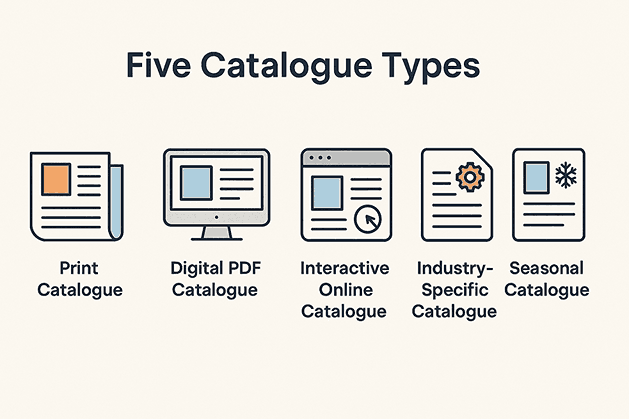
✅ Product
Used by retail brands and wholesalers to showcase inventory.
✅ Corporate Service
Promote business services such as healthcare, education, and consulting.
✅ Real Estate
Highlight properties, floor plans, amenities, and locations.
✅ Industrial & Equipment
Explain specifications, safety standards, and performance details.
✅ Event & Wedding
Show designs, packages, and photography styles.
Each requires a tailored catalogue designing approach to suit the buyer journey of its target audience.
Why Catalogue Designing Still Dominates Marketing in 2025
Despite digital dominance, catalogues outperform many online tactics because they control how prospects consume information.
Here are some compelling statistics:
- Buyers spend 34% more time reviewing catalogues than scrolling ads.
- Printed materials have a 70% higher memory retention rate than digital-only promotions.
- Businesses using catalogues see 25%-50% higher conversion rates compared to brands relying solely on social media ads.
This happens because catalogue designing offers:
- Distraction-free browsing
- Visual clarity of offerings
- Credibility that social media ads can’t match
As competition increases, customers want more thoughtful brand interactions—not noise. Catalogues offer exactly that.
21 Powerful Ways Catalogue Designing Drives Success in 2025
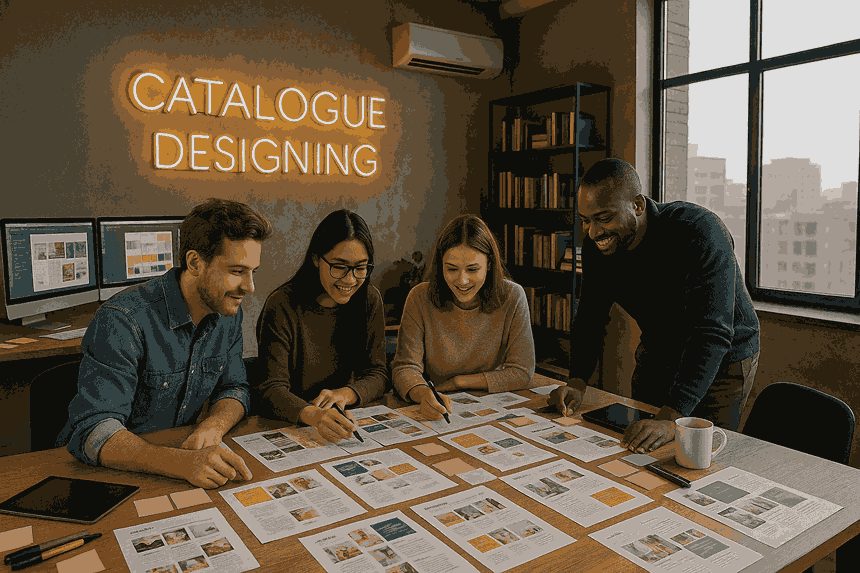
1. Create Strong First Impressions
Professionally executed catalogue designing establishes trust instantly. A high-quality paper finish, sharp imagery, and balanced typography subconsciously signal reliability and professionalism.
Your catalogue might be the first offline brand experience a customer has—make it memorable.
2. Visual Storytelling Drives Emotional Buying
Catalogue designing is not about dumping product photos onto pages—it tells a story.
Designers use layouts to guide attention:
- Lifestyle visuals create emotional resonance
- White space improves clarity
- Flowing layouts keep readers engaged
Humans buy emotionally and justify logically. Visual storytelling connects emotionally before price and specs even matter.
3. Higher Sales Conversion Rates
Compared to ads that disappear in seconds, catalogues remain visible and tangible.
Customers:
- Reread catalogues
- Compare pages
- Bookmark offers
This leads to longer engagement which directly correlates to higher conversion rates.
Catalogue designing ensures:
- Easy feature comparisons
- Clear call-to-action placement
- Organized product journeys
4. Increased Brand Recall
Because catalogues create a tactile connection, they dramatically increase memory retention.
This means:
- Customers remember your brand longer
- Referrals become more frequent
- Brand reputation strengthens organically
Strong catalogue designing ensures consistent visual branding that reinforces recognition.
5. Perfect for Premium Markets
Luxury brands, wedding services, property developers, and high-value product businesses depend heavily on catalogue designing because premium buyers demand sophistication.
Minimal layouts, premium photo treatments, and subtle typography easily position brands as elite without needing excessive copywriting.
6. Works Across Online and Offline Marketing
Modern catalogue designing is no longer restricted to paper printing.
Digital catalogues now integrate:
- QR codes for instant purchases
- Website product links
- WhatsApp chat buttons
- Embedded videos
Your catalogue becomes a bridge between offline browsing and online purchasing — exactly what today’s consumer expects.
7. Organizes Complex Product Lines Easily
If your business offers:
- Multiple variations
- Technical specifications
- Color/size options
- Package bundles
Catalogue designing simplifies complexity using:
- Grid layouts
- Icon systems
- Comparison tables
- Infographics
This enhances decision clarity which directly impacts sales speed.
8. Boosts Trust Through Detailed Transparency
Catalogues provide buyers with:
- Dimensions and specs
- Pricing tiers
- Warranty info
- Certifications
Transparency removes hesitation.
Trust grows. So do conversions.
9. Reduces Dependence on Sales Staff
Well-crafted catalogue designing allows prospects to self-educate without pushing staff involvement early in the funnel.
This:
- Saves manpower
- Shortens inquiry cycles
- Pre-qualifies leads
Sales conversations become warmer and faster because prospects arrive already informed.
10. Ideal for B2B Marketing
Business buyers need:
- Structured information
- Professional documentation
- Credibility markers
Catalogues establish authority in B2B marketing and support:
- Vendor meetings
- Presentations
- Corporate tenders
Catalogue designing becomes part of brand certification.
11. Long Shelf Life
Digital ads expire fast. Catalogues remain usable for months or years.
When businesses update designs annually:
- Branding stays fresh
- Offers remain competitive
- ROI multiplies over time
Catalogue designing offers ongoing marketing impact without recurring ad expenses.
12. Enables Personalization
Modern digital catalogue designing allows:
- Custom versions for niche markets
- Personalized pricing pages
- Segmented offers
Personalization increases relevance—and relevance increases conversions dramatically.
13. Perfect Tool for Lead Generation
One of the strongest advantages of catalogue designing in 2025 is its role as a lead magnet.
Modern catalogues include:
- QR codes to inquiry forms
- Website links for price requests
- “Request a samples” buttons
- Direct WhatsApp call-to-actions
This turns your catalogue from a mere brochure into a lead-capture engine that operates 24/7 without sales staff intervention.
14. Improved Buyer Confidence
People hesitate before purchases when information feels incomplete or confusing. Professional catalogue designing removes uncertainty by organizing details logically.
Well-designed catalogues:
- Provide complete product descriptions
- Showcase real photos and usage images
- Clarify terms and features
This transparency increases buyer confidence and lowers the chance of abandoned purchases.
15. Supports Cross-Selling & Upselling
Strategic layouts within catalogue designing encourage customers to explore more than their original buying intent.
Design elements that support upsells:
- “You may also like…” sections
- Package deal grids
- Feature highlights for premium versions
Customers often add complementary products they hadn’t originally planned to buy—raising average order value significantly.
16. Works as a Brand Authority Document
Businesses that invest in professional catalogue designing automatically position themselves as industry leaders.
Think about it:
Companies without catalogues often look temporary or less established.
Companies with polished catalogues appear:
✅ Professional
✅ Stable
✅ Trustworthy
Catalogues function as brand certification documents during:
- Corporate meetings
- Vendor negotiations
- Franchise proposals
17. Ideal for Distributor & Dealer Networks
Dealers rely heavily on sales materials to pitch accurately. Catalogue designing ensures consistency across all partners, eliminating brand confusion.
Dealers can:
- Present standardized pricing
- Display product specifications correctly
- Maintain brand presentation quality
This ensures your business identity remains intact regardless of who sells your offerings.
18. Easy to Share & Distribute Digitally
Digital catalogue designing allows global instant distribution.
Businesses now share catalogues via:
- WhatsApp Business
- Email campaigns
- Social media ads
- Website downloads
Your catalogue becomes a shareable asset that travels organically across buyer networks.
19. Supports Story-Based Brand Marketing
Catalogue designing enables storytelling by combining:
- “About Us” journey sections
- Founder’s message pages
- Sustainability commitments
- Manufacturing process visuals
These sections humanize businesses and build trust beyond simple transactions.
20. Cost-Effective Marketing ROI
While the initial catalogue design cost may seem higher than running ads, the long-term ROI beats most digital channels.
A professionally designed catalogue:
- Lasts 6–24 months
- Supports multiple campaigns
- Replaces multiple brochures
This makes catalogue designing one of the most cost-efficient marketing investments for mid-sized and growing businesses.
21. Enhances Customer Experience
Finally, the greatest benefit of catalogue designing lies in experience.
Customers appreciate:
- Calm browsing without ad distractions
- Clear product comparison layouts
- Visual inspiration among pages
Good catalogues don’t sell aggressively — they guide and inspire purchasing decisions naturally.
Latest Catalogue Designing Trends for 2025
To succeed, businesses must align with evolving design expectations.
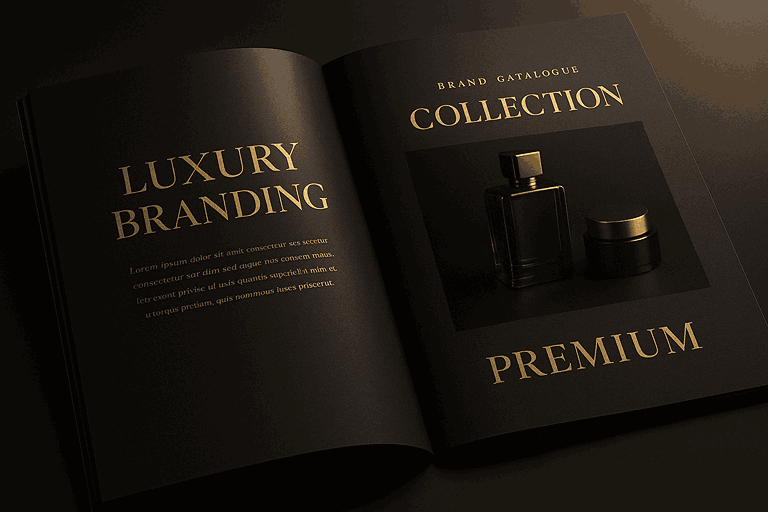
🔥 1. Minimalist Luxury Design
- Clean grids
- Large hero visuals
- High whitespace ratios
Luxury presentation builds premium perception, even for regular products.
🔥 2. Story-Led Visual Sequences
Modern catalogues follow:
Cover → Brand story → Use cases → Solutions → Product details → CTA
Catalogue designing is now experience-led, not product-database-focused.
🔥 3. Smart Interactive PDFs
Digital formats now support:
- Clickable buttons
- Embedded videos
- Scroll navigation
- Searchable product tables
This transforms catalogues into interactive sales portals.
🔥 4. AI-Assisted Image Enhancements
Catalogues increasingly use AI for:
- Background removal
- Consistent lighting retouches
- Virtual product staging
Catalogue designing now reduces costly physical photoshoots.
🔥 5. Localized & Regional Variations
Top brands now produce region-specific catalogue versions to include:
- Local pricing
- Cultural imagery
- Language preferences
Personal relevance in catalogue designing increases trust and purchase intent.
Step-by-Step Professional Catalogue Designing Process
If you’re wondering how top agencies execute high-performing catalogue designing projects, here’s the proven workflow:
Step 1: Brand Analysis
Study:
- Target audience
- Brand colors & fonts
- Business goals
Step 2: Content Mapping
Designers structure:
- Category flow
- Page spacing
- CTA placements
Step 3: Photography & Visual Assembly
- Custom photoshoots or stock visuals
- Editing & retouching
- Product stylization
Step 4: Layout Design
This is where catalogue designing truly comes alive:
- Typography hierarchy
- Visual balance
- White spacing control
Step 5: Copywriting Integration
SEO-friendly copy blended without cluttering visuals.
Step 6: Proofing & Revisions
Multiple quality checks for:
- Alignment
- Color precision
- Data accuracy
Step 7: Print + Digital Optimization
Final export ensures:
- Print color profiles
- Web-optimized PDFs
- Mobile-friendly dimensions
Common Catalogue Designing Mistakes to Avoid
Avoid these profit-killing errors:
❌ Overcrowded pages
❌ Poor image quality
❌ Inconsistent typography
❌ Weak CTAs
❌ No lead capture links
Successful catalogue designing remains clean, emotionally persuasive, and conversion-focused.
Refer to These Links For More Information-
BONUS POINT: How Catalogue Designing Builds Multi-Channel Consistency
Catalogues unify brand presence across:
✅ Print
✅ Website
✅ Social media visuals
✅ Trade show displays
✅ Dealer presentations
This consistency builds trust no digital ad alone can generate.
Frequently Asked Questions (FAQs)
Q1. What makes professional catalogue designing better than DIY templates?
Professionals master layout psychology, CTA placement, storytelling flow, and sales-focused visual hierarchy that templates simply can’t replicate.
Q2. Is catalogue designing still useful in a digital-only world?
Yes. Digital catalogues outperform websites for lead nurturing because they present curated content without navigation distractions.
Q3. How much does professional catalogue designing cost in India?
Costs typically range between ₹8,000 to ₹40,000+ depending on page count, photography requirements, and complexity.
Q4. Can catalogue designing help local businesses?
Absolutely. Local retailers, clinics, showrooms, and service providers gain massive credibility and conversion lift using catalogues as visual brochures.
Q5. How long should a catalogue be?
Most high-performing catalogues range between 12–36 pages depending on product volume and storytelling goals.
Conclusion – Why Catalogue Designing Remains a Marketing Powerhouse in 2025
The future of marketing is not purely digital—it’s integrated.
Catalogue designing perfectly bridges emotional engagement, visual storytelling, and instant lead generation.
In 2025, when consumers crave authenticity and clarity, professionally crafted catalogues offer:
✅ High trust
✅ Long-term ROI
✅ Premium brand positioning
✅ Lead generation power
✅ Multichannel consistency
Whether you’re a startup or a growing brand, investing in catalogue designing is no longer optional—it’s a strategic necessity.
🚀 Strong CTA
If you want your brand to:
✅ Look premium
✅ Convert more leads
✅ Build lasting trust
✅ Present products professionally
Then it’s time to invest in expert catalogue designing services.
👉 Visit Logo Designer India
👉 Get a FREE catalogue consultation and discover how expert design can transform your sales strategy in 2025.