
Introduction
Have you ever picked up a product catalogue and instantly felt drawn to explore every page? That’s not an accident — it’s the work of a skilled Catalogue Designer.
In today’s competitive marketplace, a well-designed catalogue can be the difference between a customer scrolling past your brand or stopping to explore what you offer. Whether you run a manufacturing business, a fashion label, or an interior design firm, hiring the right Catalogue Designer is one of the smartest investments you can make in 2026.
At Logo Designer India, we’ve seen firsthand how a professionally designed catalogue transforms the way customers perceive a brand. In this guide, we’ll walk you through everything you need to know about finding and working with the best Catalogue Designer for your business.
Why Every Business Needs a Professional Catalogue Designer
A catalogue is often the first detailed introduction a customer has to your products. If it looks cluttered, outdated, or poorly organized, potential buyers may simply move on.
This is exactly why hiring an experienced Catalogue Designer matters so much.
The Role of a Catalogue Designer in Brand Storytelling
A good Catalogue Designer doesn’t just arrange images and text. They craft a visual narrative that:
- Highlights your best products first
- Uses consistent branding (colors, fonts, logo placement)
- Guides the reader’s eye naturally through each page
- Balances white space with content for easy readability
Think of your catalogue as a silent salesperson. It needs to speak your brand’s language even when no one is around to explain it.
Statistics That Prove the Value of Good Design
According to general industry research, businesses with professionally designed marketing materials — including catalogues — see noticeably higher engagement and conversion rates compared to those using generic, DIY layouts. Studies referenced by sources like HubSpot consistently show that visual consistency across branding materials increases customer trust by a significant margin.
This is why more Indian businesses are turning to a dedicated Catalogue Designer instead of relying on in-house staff with no design background.
Industries That Benefit Most from a Catalogue Designer
While almost any business can use a catalogue, certain industries rely on a professional Catalogue Designer more heavily than others.
Manufacturing and Industrial Businesses
Manufacturers often deal with hundreds of SKUs, technical specifications, and B2B buyers who need clarity. A Catalogue Designer organizes this complex information into digestible, well-structured pages.
Fashion and Apparel Brands
Fashion catalogues are as much about mood and aesthetic as they are about product listing. A skilled one understands how to showcase clothing lines with the right lighting, spacing, and seasonal themes.
Interior Design and Furniture Companies
Furniture and home décor brands need catalogues that help customers visualize products in real settings. A good designer with experience in lifestyle imagery adds enormous value here.
Jewelry and Luxury Goods
For high-value products like jewelry, presentation is everything. A good designer uses premium layouts, close-up shots, and elegant typography to reflect the luxury positioning of the brand.
Food and FMCG Brands
Product packaging, nutritional details, and vibrant visuals all need careful handling. A best designer ensures compliance-friendly layouts that still look appetizing and appealing.
B2B Export Businesses
Indian exporters often need multilingual, specification-heavy catalogues for international buyers. A good catalogue maker familiar with global standards can make a huge difference in first impressions.
No matter your industry, the core principle remains the same: a Catalogue Designer translates your products into a visual language your customers understand instantly.
What Makes a Great Catalogue Designer?
Not every designer who can use Photoshop qualifies as a great designer. There’s a specific skill set required.
1. Strong Understanding of Layout and Grid Systems
A professional knows how to structure pages using grids so that everything feels aligned and intentional, not random.
2. Typography Expertise
Fonts matter more than most business owners realize. The right designing executive selects typography that matches your brand personality — elegant, bold, minimal, or playful.
3. Print and Digital Format Knowledge
Today’s catalogues aren’t just printed booklets. A skilled person creates files optimized for:
- PDF downloads
- E-commerce websites
- Social media carousels
- Print-ready formats (CMYK, bleed lines, etc.)
4. Attention to Product Photography Integration
A Catalogue Designer must know how to work with product images — cropping, color correction, and placement — so every item looks its best.
Catalogue Designer vs Graphic Designer vs Brand Designer: What’s the Difference?
Business owners often confuse these roles. Understanding the difference helps you hire the right person for the job.
Graphic Designer
A graphic designer handles broad visual tasks — social media posts, banners, flyers. They may or may not specialize in long-format, structured documents like catalogues.
Brand Designer
A brand designer focuses on your overall identity — logo, color palette, tone of voice. They set the foundation but don’t always execute detailed page-by-page layouts.
Catalogue Designer
A Catalogue Designer specializes specifically in multi-page, structured documents. They combine skills from both graphic and brand design but add:
- Page flow and pagination expertise
- Grid-based consistency across dozens (or hundreds) of pages
- Print production knowledge (bleed, trim, resolution)
- Experience organizing large volumes of product data
Why this matters: Hiring a general graphic designer for a 50-page catalogue often leads to inconsistent formatting and wasted revisions. A dedicated Catalogue Designer avoids these issues from the start because it’s their core specialty, not a side task.
Real-World Example: How a Catalogue Designer Transformed a Local Business
Let’s take a relatable scenario.
Meera runs a small handicrafts export business in Jaipur. For years, she used a basic Word document with product photos pasted in — no consistent formatting, mismatched fonts, and low-resolution images.
When she finally hired a professional Catalogue Designer, everything changed. The new catalogue featured:
- A clean cover page with her logo
- Organized product categories
- High-quality images with proper alignment
- A consistent color palette matching her brand
Within a few months, Meera reported that international buyers responded faster and took her business more seriously. This is the power a Catalogue Designer brings — not just aesthetics, but credibility.
“Curious what great catalogue design looks like? Browse our design portfolio to see real projects our team has delivered.”
The Step-by-Step Process a Professional Catalogue Designer Follows
Wondering what actually happens once you hire a Catalogue Designer? Here’s a typical workflow.
Step 1: Discovery and Briefing
The Catalogue Designer gathers information about your brand, target audience, product range, and design preferences.
Step 2: Content and Asset Collection
You provide product images, descriptions, specifications, and pricing. A good Catalogue Designer will guide you on image resolution and formatting requirements.
Step 3: Wireframing and Layout Planning
Before diving into visuals, an experienced Catalogue Designer creates a rough structure — deciding page order, categories, and flow.
Step 4: Design and Visual Development
This is where the Catalogue Designer applies branding, typography, color schemes, and imagery to bring the catalogue to life.
Step 5: Review and Revisions
You review the draft and request changes. Most professional Catalogue Designer services include 2–3 rounds of revisions.
Step 6: Final Delivery
Once approved, the Catalogue Designer delivers final files — print-ready PDFs, editable source files, and digital-optimized versions.
Pro Tip: Always ask your Catalogue Designer for both high-resolution print files and compressed web-friendly versions to avoid delays later.
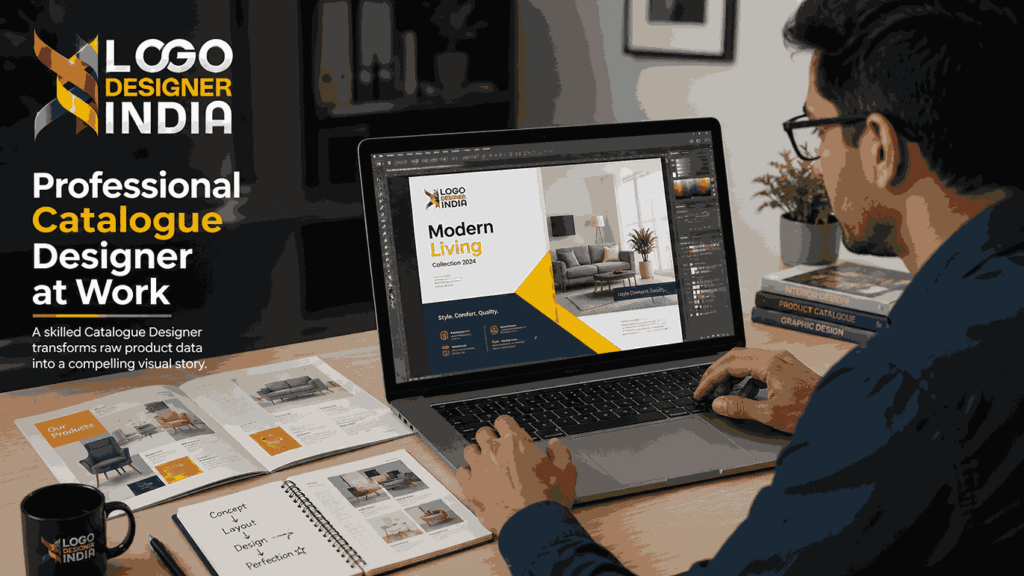
Key Elements Every Catalogue Designer Should Include
When you hire a Catalogue Designer, make sure the final product includes these essentials.
Cover Page That Grabs Attention
The cover sets the tone. A talented Catalogue Designer will use your logo, brand colors, and a striking hero image.
Clear Product Categorization
Customers shouldn’t have to hunt for what they need. Categories, subcategories, and page numbers should be intuitive.
Pricing and Specification Details
Depending on your industry, your Catalogue Designer should include:
- SKU numbers
- Dimensions
- Material details
- Pricing tiers (if applicable)
Call-to-Action Pages
Every catalogue should end with contact details, website links, and a clear next step for the buyer.
“A talented Catalogue Designer will use your logo, brand colors, and a striking hero image — the same core brand identity elements HubSpot identifies as essential for consistent recognition across every touchpoint.”
Tools and Software Used by Professional Catalogue Designers
Curious what’s happening behind the scenes? Most professional catalogue makers experts rely on industry-standard tools.
- Adobe InDesign – The gold standard for multi-page catalogue layouts and print production.
- Adobe Photoshop – Used for image editing, retouching, and color correction.
- Adobe Illustrator – Ideal for vector graphics, icons, and custom illustrations within catalogues.
- Canva Pro – Sometimes used for simpler digital catalogues or quick social media versions.
- Figma – Increasingly popular for interactive digital catalogues and collaborative design reviews.
A skilled Catalogue Designer doesn’t just know how to use these tools — they know when to use each one depending on the project’s complexity and final output format.
This technical expertise is exactly why DIY catalogue attempts using basic tools like PowerPoint or Word often fall short compared to work from a trained Catalogue Designer.
Print vs Digital Catalogues: What Should Your Catalogue Designer Focus On?
This is a common question business owners ask. The answer depends on your target audience.
Print Catalogues
Best for:
- Trade shows and exhibitions
- Retail store displays
- High-end clients who appreciate tangible materials
A designer working on print needs to understand paper quality, binding types, and color accuracy for physical printing.
Digital Catalogues
Best for:
- E-commerce websites
- Email marketing campaigns
- Social media sharing
Digital catalogues designed by a skilled person often include clickable links, embedded videos, or interactive elements.
Pro Tip: Many businesses today request both versions from their designers to maximize reach across offline and online channels.
Top Catalogue Design Trends to Watch in 2026
Design trends evolve every year, and a forward-thinking Catalogue Designer stays updated to keep your brand competitive.
1. Minimalist Layouts with Bold Typography
Clean, uncluttered pages with striking headline fonts are dominating catalogue design in 2026.
2. Sustainability-Focused Messaging
More brands are asking to highlight eco-friendly materials, ethical sourcing, and sustainability certifications visually.
3. Interactive Digital Catalogues
Clickable product links, embedded videos, and QR codes are becoming standard requests for digital catalogues.
4. Personalized Catalogue Sections
Some businesses now request to create modular sections that can be customized for different customer segments or regions.
5. Earthy and Warm Color Palettes
Moving away from stark corporate tones, many brands are asking their Catalogue Designer to incorporate warmer, more human color schemes.
6. Storytelling Through Design
Rather than just listing products, catalogues increasingly tell a brand’s story — origin, craftsmanship, and values — through thoughtful design choices made by the Catalogue Designer.
Staying current with these trends ensures your catalogue doesn’t feel outdated the moment it’s published.
How to Choose the Right Catalogue Designer for Your Business
With so many options available, how do you pick the right Catalogue Designer? Here’s a simple checklist.
- Review Their Portfolio – Look for variety and quality across different industries.
- Check Client Testimonials – Genuine feedback tells you about reliability and communication.
- Ask About Revisions – A good Catalogue makers should offer reasonable revision rounds.
- Discuss Turnaround Time – Make sure deadlines align with your launch or event schedule.
- Confirm File Delivery Formats – Ensure you receive editable files, not just final PDFs.
Red Flags to Avoid
- No clear pricing structure
- Unwillingness to share past work
- Poor communication during initial consultation
- Overly generic templates with no customization
The Cost of Hiring a Catalogue Designer in India
Pricing for a Catalogue Designer in India varies based on:
- Number of pages
- Complexity of layout
- Print vs digital requirements
- Experience level of the designer or agency
While freelancers may charge lower rates, agencies like Logo Designer India offer a more structured process — from concept to final delivery — ensuring consistency across your entire brand identity, not just the catalogue itself.
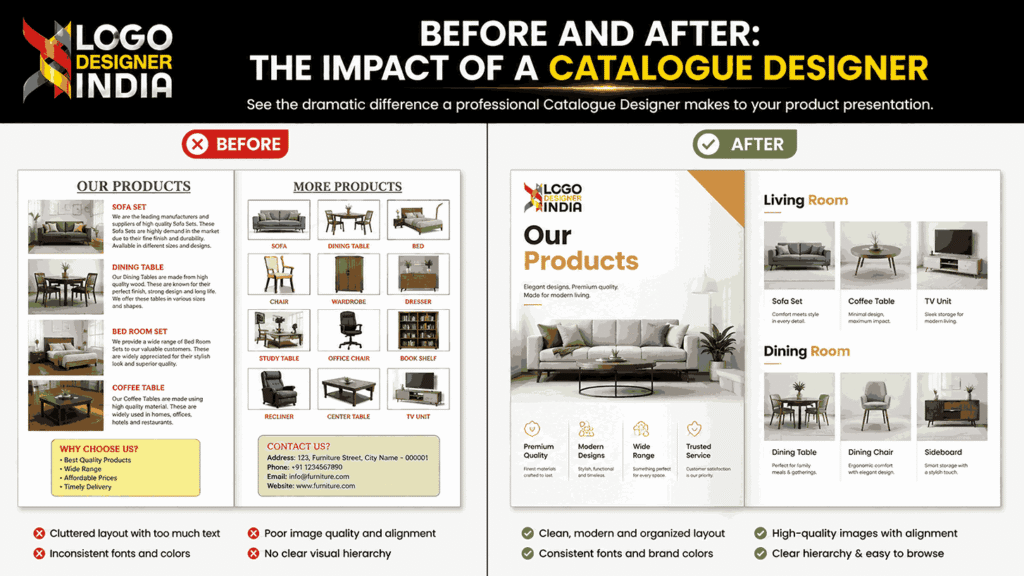
Common Mistakes Businesses Make Without a Professional Catalogue Designer
Many businesses try the DIY route before realizing the value of hiring a dedicated designers. Here are common pitfalls.
Inconsistent Branding
Without trained designers, fonts, colors, and logo placements often vary page to page, confusing customers.
Overcrowded Pages
Cramming too much information onto one page overwhelms readers. A professional person knows how to balance content with breathing room.
Low-Quality Images
Blurry or pixelated product photos hurt credibility instantly. Designers know proper resolution and compression techniques for both print and web.
Ignoring Mobile Optimization
If your digital catalogue isn’t mobile-friendly, you’re losing a huge chunk of potential customers browsing on their phones.
What Clients Typically Say After Hiring a Catalogue Designer
To understand the real impact, consider this common feedback pattern businesses share after working with a professional Catalogue Designer.
Before Hiring a Catalogue Designer
- “Our catalogue looked outdated compared to competitors.”
- “Customers couldn’t find products easily.”
- “We had no consistent branding across pages.”
- “Print quality was poor and colors looked off.”
After Hiring a Catalogue Designer
- “Buyers now compliment our catalogue during meetings.”
- “Our sales team closes deals faster using the new catalogue.”
- “The layout finally matches our website and social media branding.”
- “We received a print-ready file with zero production issues.”
This shift illustrates exactly why businesses across India — from small startups to established exporters — are prioritizing a professional Catalogue Designer as part of their core marketing investment, not an optional extra.
How Logo Designer India Helps as Your Trusted Catalogue Designer
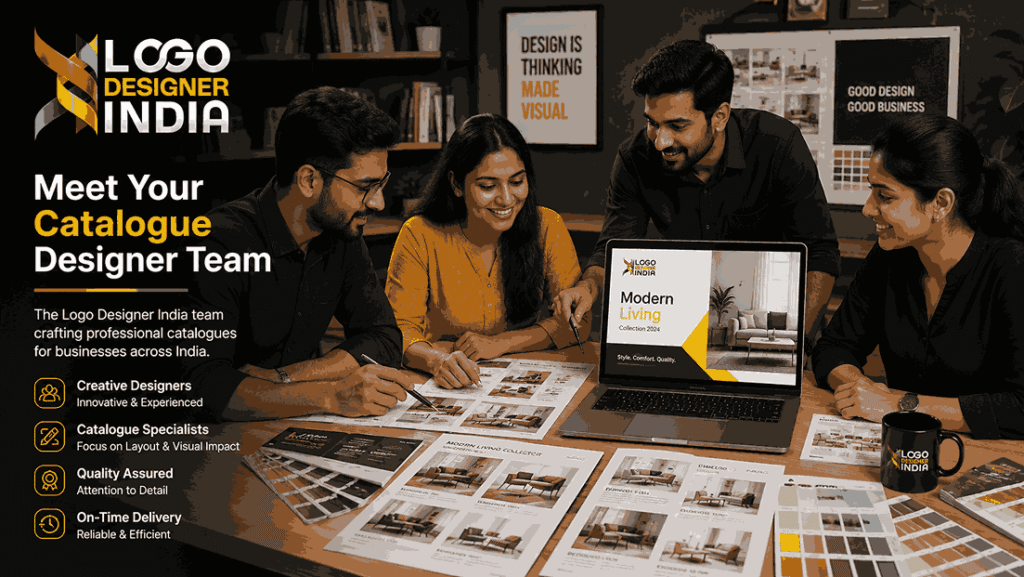
At Logo Designer India, we understand that a catalogue is more than a product list — it’s a reflection of your brand’s professionalism.
Our team works as your dedicated Designers, offering:
- Custom layout design tailored to your industry
- Consistent branding across logo, catalogue, and marketing materials
- Both print-ready and digital catalogue formats
- Fast turnaround times without compromising quality
- Affordable packages suited for startups and established businesses alike
Whether you need a 10-page product catalogue or a 100-page detailed brochure, our team ensures every page reflects your brand’s true value.
Conclusion
A well-crafted catalogue can elevate your brand, build trust, and drive sales — but only when it’s created by a skilled Catalogue Designer who understands both design principles and your business goals.
From layout structure to typography, print specifications to digital optimization, every detail matters. Investing in a professional Catalogue Designer in 2026 isn’t just a design choice — it’s a business growth strategy.
Ready to give your products the professional showcase they deserve?
Don’t let a poorly designed catalogue cost you customers. Partner with Logo Designer India, your trusted Catalogue Designer team, and turn your product range into a powerful sales tool.
📞 Call us now at 9854661818 or visit logodesignerindia.in to get a free consultation and quote today.
Frequently Asked Questions (FAQs)
1. What does a Catalogue Designer do exactly?
A Catalogue Designer creates visually organized layouts showcasing your products or services, combining images, text, and branding elements into a professional document for print or digital use.
2. How much does it cost to hire a Catalogue Designer in India?
Costs vary based on page count, complexity, and format (print or digital). It’s best to request a custom quote based on your specific catalogue requirements.
3. How long does it take for designers to complete a project?
Turnaround time depends on the catalogue’s size, but most professional Catalogue Designers deliver projects within 7 to 15 business days, depending on revisions.
4. Can a these Designers create both print and digital versions?
Yes, most experienced Catalogue Designers, including our team at Logo Designer India, provide both print-ready files and digital formats optimized for websites and social media.
5. Why should I hire a professional Catalogue Designer instead of doing it myself?
A professional Catalogue Designer brings expertise in layout, typography, and branding consistency — ensuring your catalogue looks polished, credible, and aligned with your business identity.
6. Do I need to provide product photos to Designers, or can they arrange photography?
Most Catalogue Designers work with photos you provide, but many agencies, including Logo Designer India, can also coordinate professional product photography if needed.
7. Can a Designers match my existing brand guidelines?
Yes. A skilled Catalogue Designer will always align fonts, colors, and logo usage with your existing brand identity for full consistency.
8. What file formats will I receive ?
Typically, you’ll receive a print-ready PDF, an editable source file (like InDesign), and web-optimized formats such as JPEG or interactive PDF for digital use.