
Introduction:
In 2025, consumers are overwhelmed with choices. Walk into a supermarket or scroll through an eCommerce platform, and you’ll see hundreds of similar products competing for attention. In this crowded environment, a packaging designer plays a decisive role in whether a product gets noticed—or ignored.
A professional packaging designer doesn’t just make your product look good. They create packaging that communicates value, builds trust, follows legal norms, and directly influences buying behaviour. Studies show that more than 70% of purchase decisions are made at the point of sale, and packaging is the single biggest factor in those decisions.
Whether you are a startup launching your first product, an FMCG brand entering a competitive category, or a D2C business scaling online, investing in the right packaging designer can dramatically impact your success.
This in-depth guide explains:
- What a packaging designer actually does
- Why packaging design affects sales and brand trust
- How professional packaging outperforms DIY designs
- Real-world examples, costs, trends, and mistakes to avoid
What Is a Packaging Designer? (Simple & Practical Explanation)
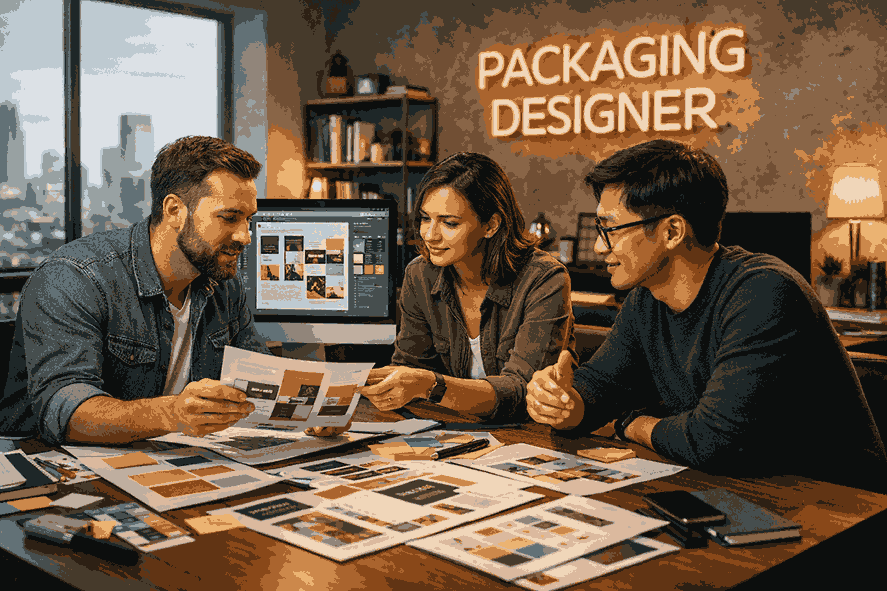
A packaging designer is a creative and strategic professional responsible for designing the visual, structural, and informational aspects of product packaging.
Their work includes:
- Visual branding
- Structural layout
- Print accuracy
- Consumer psychology
- Regulatory compliance
Unlike graphic designers who focus only on visuals, a packaging designer understands materials, printing, shelf behaviour, and legal requirements.
Core Responsibilities of a Packaging Designer
- Designing boxes, labels, pouches, bottles, and cartons
- Creating print-ready artwork with correct colour modes
- Structuring content hierarchy for easy readability
- Ensuring compliance with industry regulations
- Optimising packaging for both retail shelves and online platforms
👉 According to Forbes, products with well-designed packaging are perceived as 30–40% more valuable, even when the product quality is identical.
Why Packaging Design Is a Sales Tool, Not a Decoration
Many businesses treat packaging as an afterthought. This is one of the biggest branding mistakes.
Packaging is:
- A silent salesperson
- A trust signal
- A brand ambassador
A professional packaging designer understands that packaging must:
- Stop the customer
- Communicate benefits quickly
- Create emotional connection
- Encourage purchase
If your packaging fails at any of these steps, sales suffer—regardless of product quality.
10 Amazing Reasons to Hire a Professional Packaging Designer
1. First Impressions Decide the Sale
Consumers take less than 5 seconds to decide whether to pick up a product.
A professional packaging designer ensures:
- Strong visual hierarchy
- Clean layout
- Instantly readable information
📌 Example:
In snack or cosmetic categories, customers often choose products purely based on packaging appeal, even when unfamiliar with the brand.
2. Builds Strong Brand Identity
Your logo alone doesn’t build a brand—packaging does.
A skilled packaging designer maintains:
- Consistent colours
- Recognisable typography
- Unified brand tone
This consistency creates brand recall, making customers recognise your product instantly during repeat purchases.
3. Packaging Design Influences Consumer Psychology
Colours, fonts, and layouts trigger emotions subconsciously.
A professional packaging designer understands:
- Red & yellow = appetite, urgency
- Green = organic, eco-friendly
- Black & gold = premium, luxury
Typography also matters:
- Serif fonts = trust & heritage
- Sans-serif fonts = modern & clean
This psychological alignment increases conversion rates.
4. Compliance Errors Can Destroy a Brand
Incorrect packaging information can result in:
- Legal penalties
- Product recalls
- Marketplace rejection
A professional packaging designer ensures:
- Correct ingredient lists
- Barcode placement
- MRP, batch, and expiry details
- FSSAI / FDA / cosmetic compliance
This is critical for food, pharma, cosmetic, and FMCG brands.
5. Packaging Optimised for Retail & eCommerce
Modern packaging must work offline and online.
A packaging designer designs for:
- Shelf visibility
- Amazon & Flipkart thumbnails
- Zoom clarity on mobile
Packaging that looks good in-store but fails online leads to lost digital sales.
6. Sustainability Is Now a Buying Factor
Today’s consumers actively choose eco-conscious brands.
A modern packaging designer focuses on:
- Minimal ink usage
- Recyclable materials
- Reduced plastic dependency
📊 According to HubSpot, 81% of consumers prefer brands with sustainable packaging.
7. Competitive Differentiation in Saturated Markets
In categories like:
- Snacks
- Cosmetics
- Health supplements
- Beverages
Most products look similar.
A professional packaging designer helps your product:
- Stand out visually
- Highlight unique selling points
- Avoid “copycat” designs
8. Cost Savings Through Print Accuracy
Amateur packaging often leads to:
- Colour mismatches
- Incorrect dimensions
- Reprints
A professional packaging designer understands:
- CMYK vs Pantone
- Bleed and margins
- Paper and material limitations
This saves money in the long run.
9. Scalable Design for Product Variants
Launching multiple flavours or sizes?
A professional packaging designer creates:
- Flexible design systems
- Variant-friendly layouts
- Brand consistency across SKUs
This allows easy expansion without redesigning everything.
10. Higher Brand Trust & Customer Loyalty
People trust products that look professional.
Well-designed packaging:
- Feels reliable
- Signals quality
- Encourages repeat purchases
This directly improves Customer Lifetime Value (CLV).
Types of Packaging Designs (Choose the Right Expert)
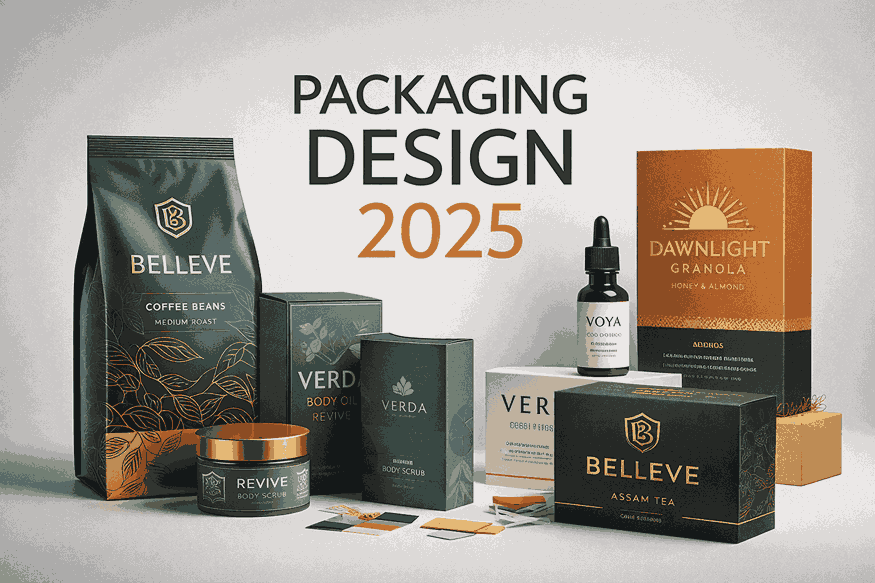
FMCG Packaging Design
- Fast-moving products
- Shelf-focused layouts
Luxury Packaging Design
- Premium finishes
- Foil, embossing, textures
D2C & eCommerce Packaging Design
- Subscription boxes
- Unboxing experience
Industrial Packaging Design
- Bulk packaging
- Logistics efficiency
How a Professional Packaging Designer Works: Step-by-Step Process
Hiring a professional packaging designer is not about getting a single design file. It’s a structured, research-driven process designed to reduce risk and maximise product success.
Below is the complete workflow followed by experienced packaging designers.
Step 1: Brand, Product & Market Discovery
Every successful packaging project starts with deep understanding.
A professional packaging designer analyses:
- Brand vision and positioning (mass, mid-range, premium)
- Target audience demographics and behaviour
- Product category standards
- Price point and margin expectations
- Sales channels (retail, D2C, marketplaces)
This step ensures the packaging matches buyer expectations and market realities.
Step 2: Competitor & Shelf Analysis
Good packaging doesn’t exist in isolation.
A skilled packaging designer studies:
- Colour dominance in the category
- Common layout patterns
- Visual clutter vs minimal designs
- What works and what fails on shelves
📌 Example:
If 90% of competitors use bright red packaging, a strategic designer may opt for muted tones or high-contrast colours to break shelf monotony.
Step 3: Creative Direction & Concept Development
At this stage, the packaging designer defines:
- Visual tone (modern, traditional, playful, premium)
- Colour palette and typography
- Illustration or photography style
- Branding emphasis
Mood boards and reference styles help align expectations before final execution.
Step 4: Structural Design & Dieline Preparation
Packaging is not flat artwork—it must fit perfectly.
A professional packaging designer works with:
- Box dielines
- Label dimensions
- Pouch and bottle templates
This prevents issues like:
- Design cutting off during printing
- Misaligned folds
- Wasted materials
Step 5: Information Hierarchy & Legal Compliance
This is where many DIY designs fail.
A professional packaging designer ensures:
- Product name is instantly visible
- Key benefits are readable from a distance
- Ingredients and usage instructions are clear
- Mandatory legal text is correctly placed
This is especially important for food, cosmetic, pharmaceutical, and FMCG brands.
Step 6: Print-Ready Artwork & Final Quality Checks
Final files are delivered with:
- CMYK or Pantone colours
- Correct bleed and margins
- High-resolution print PDFs or source files
A professional packaging designer also coordinates with printers when required to ensure accurate output.
How Much Does a Packaging Design Cost in India? (Detailed Breakdown)
Packaging design pricing varies based on complexity and industry.
Average Packaging Designer Cost (India)
| Packaging Type | Approx Cost Range |
|---|---|
| Simple Label Design | ₹3,000 – ₹7,000 |
| Box Packaging Design | ₹8,000 – ₹25,000 |
| FMCG Packaging System | ₹15,000 – ₹50,000 |
| Premium / Luxury Packaging | ₹30,000 – ₹1,00,000+ |
💡 Insight: Brands that invest more in packaging design usually experience higher shelf impact and faster market acceptance.
Packaging Designer vs DIY Tools: Why Professionals Always Win
Online tools and templates may look cost-effective initially, but they come with serious limitations.
Problems With DIY Packaging Design
- Generic layouts used by hundreds of brands
- No understanding of printing limitations
- Poor font readability
- Zero legal compliance knowledge
- Weak brand differentiation
Advantages of Hiring a Professional Packaging Designer
✔ Custom, brand-specific design
✔ Consumer psychology integration
✔ Print-ready accuracy
✔ Compliance awareness
✔ Sales-oriented layout strategy
👉 A packaging designer doesn’t just design — they protect your brand investment.
How Packaging Design Directly Impacts ROI
Packaging isn’t just visual—it’s measurable.
A professional packaging designer helps increase:
- Shelf pickup rate
- Online click-through rate
- Repeat purchases
- Brand recall
Real-World Example: ROI From Professional Packaging Design
Case Study: Local Skincare Brand (India)
Problem:
Good product quality but poor shelf visibility.
Solution by Packaging Designer:
- Minimal colour palette
- Improved typography hierarchy
- Clear benefit communication
- Premium material suggestion
Result:
📈 35% sales growth within 90 days
📈 Higher repeat purchase rate
Common Packaging Design Mistakes Businesses Make
Avoiding these mistakes can save huge costs.
Top Packaging Errors
- Overcrowded layouts
- Hard-to-read fonts
- Ignoring target audience
- Poor colour contrast
- Copying competitor designs
A professional packaging designer prevents these errors before they become expensive problems.
Why Packaging Design Plays a Critical Role in Brand Storytelling
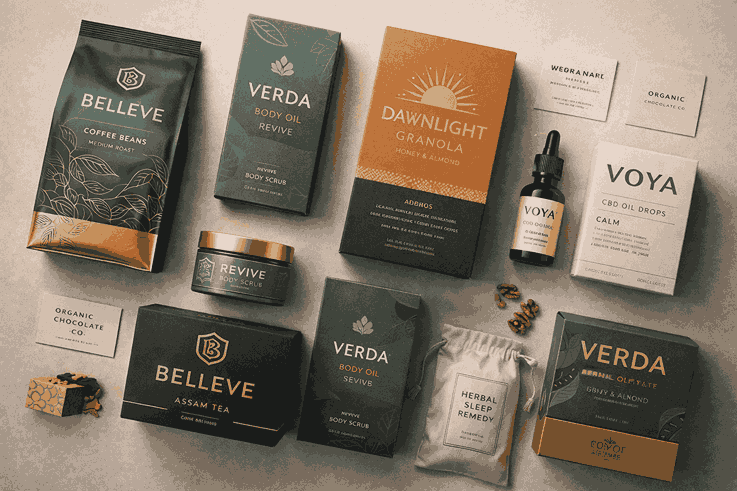
Packaging is often the first brand story a customer reads, even before visiting a website or social media page. A professional packaging designer understands how to communicate your brand’s values, origin, and promise visually—without overwhelming the customer.
Through colours, typography, imagery, and layout, packaging can tell a story of trust, quality, sustainability, heritage, or innovation. For example, earthy tones and handcrafted illustrations immediately signal organic and natural products, while clean lines and monochrome palettes convey modernity and premium positioning.
When storytelling is embedded into packaging, customers don’t just buy a product—they buy into a brand narrative, which significantly improves emotional connection and repeat purchases.
How to Choose the Best Packaging Designer in 2025
Before hiring, ask these questions:
✔ Do they understand your industry?
✔ Do they provide print-ready files?
✔ Do they understand compliance rules?
✔ Can they design scalable systems?
✔ Is ownership clearly defined?
Choosing the right packaging designer ensures long-term brand growth, not just a single project.
Top Packaging Design Trends in 2025
A professional packaging designer must stay ahead of trends because packaging trends directly influence consumer perception and trust. Below are the most impactful trends shaping packaging design in 2025.
1. Minimalist Packaging With Maximum Clarity
Minimalism continues to dominate, but with a sharper focus on information clarity.
Modern packaging designers use:
- Clean backgrounds
- Fewer colours
- Large, readable typography
- Clear benefit-driven messaging
Minimalist packaging reduces confusion and builds instant trust, especially for health, skincare, and premium food products.
2. Sustainable & Eco-Friendly Packaging Design
Sustainability is no longer a trend—it’s an expectation.
A modern packaging designer prioritises:
- Recyclable and biodegradable materials
- Kraft paper and mono-material packaging
- Reduced ink coverage
- Plastic-free alternatives
3. Smart Packaging (QR Codes & Digital Integration)
Packaging is becoming interactive.
Professional packaging designers now integrate:
- QR codes for product authenticity
- Video instructions and brand stories
- Customer reviews and loyalty programs
This bridges the gap between offline packaging and digital marketing.
4. Bold Typography & Custom Lettering
Typography-led packaging is growing fast.
Instead of heavy visuals, packaging designers are using:
- Custom fonts
- Strong typographic contrast
- Text-focused layouts
This trend works exceptionally well for snacks, beverages, and D2C brands.
5. E-commerce & Mobile-First Packaging Design
In 2025, most product discovery happens online.
A skilled packaging designer ensures:
- Packaging looks clear in thumbnails
- Text remains readable on mobile
- Key benefits are visible without zooming
Designs optimised only for physical shelves fail in digital marketplaces.
10 Advanced Expert Tips From a Professional Packaging Designer
These are practical, experience-based tips that separate average packaging from high-performing packaging.
1. Design for the Shelf, Not the Screen Alone
Always test packaging visibility from 1–2 metres distance.
2. Prioritise the Product Name First
Customers should identify the product within 3 seconds.
3. Limit Font Usage
Use maximum two fonts to maintain readability.
4. Avoid Over-Designing
Too many icons, colours, and claims reduce trust.
5. Think in Variants
Plan future flavours, sizes, or versions from day one.
6. Test Print Samples
Never approve packaging without a physical print test.
7. Respect Legal White Space
Mandatory information needs breathing room for clarity.
8. Align Packaging With Pricing
Premium pricing demands premium-looking packaging.
9. Design for Logistics
Packaging should survive transport and stacking.
10. Consistency Builds Brands
Consistency across all packaging builds long-term brand equity.
Why Consistency in Packaging Design Builds Long-Term Brand Equity
Inconsistent packaging confuses customers. Even minor changes in colour shades, logo placement, or font styles can weaken brand recall.
A professional packaging designer creates brand packaging guidelines, ensuring:
- Visual consistency across all SKUs
- Easy future expansion
- Instant shelf recognition
Over time, consistent packaging helps customers spot your product instantly—even from a distance—strengthening brand equity.
Most Common Packaging Design Mistakes Brands Still Make
Even in 2025, many brands fail due to avoidable errors.
Top Mistakes to Avoid
- Copying competitor packaging
- Using low-contrast colours
- Choosing decorative fonts over readable ones
- Ignoring compliance requirements
- Treating packaging as a one-time activity
A professional packaging designer prevents these mistakes before they cost money and reputation.
Checklist Before Final Approval
Before sending your design for printing, ensure:
✔ Brand name clearly visible
✔ Product category instantly identifiable
✔ Key benefits readable
✔ Legal information correct
✔ Barcode scannable
✔ Colours tested in print
✔ Variants aligned visually
This checklist alone can save thousands in reprint costs.
Why Hiring a Professional Packaging Designer Is a Smart Long-Term Investment
Packaging design impacts:
- Sales performance
- Brand perception
- Customer trust
- Market positioning
Unlike ads that stop working once spending stops, good packaging keeps selling every single day.
A professional packaging designer helps you:
Scale product lines efficiently
Enter markets confidently
Compete with established brands
Conclusion: Why a Professional Packaging Designer Is a Long-Term Advantage
In a market where consumers are overwhelmed with choices and attention spans are shrinking, packaging has become one of the most powerful decision-making triggers. A professionally designed package does far more than protect a product—it communicates quality, builds credibility, and shapes how a brand is remembered. This is why investing in an experienced packaging designer is not just a design decision, but a strategic business move.
As competition intensifies across FMCG, D2C, cosmetic, food, and wellness categories, brands that win are those that look trustworthy, consistent, and thoughtfully designed at first glance. Professional packaging design helps your product stand confidently beside established brands, improves conversion rates both online and offline, and supports long-term scalability as your product range grows.
Ultimately, packaging is one of the few marketing assets that continues to work long after the initial investment. Every time your product is displayed on a shelf, delivered to a customer, or shared online, your packaging speaks on behalf of your brand. Choosing the right packaging designer ensures that message is clear, compelling, and aligned with your business goals—today and well into the future.
CTA Section (High-Conversion)
🎯 Need a Professional Packaging Designer?
From FMCG to premium brands, our expert packaging designer team creates compliant, market-ready, and sales-focused packaging designs that help your product stand out and sell faster.
👉 Contact Logo Designer India today to transform your product packaging into a powerful sales tool.
FAQs:
1. What exactly does a packaging designer do?
A packaging designer creates strategic, visually appealing, and compliant packaging that helps products sell and build brand trust.
2. How important is a packaging designer for new brands?
Extremely important. Packaging often determines whether a new brand gets noticed or ignored.
3. How many times should the keyword “packaging designer” be used?
Ideally around 1% keyword density, used naturally across headings and content.
4. Can a packaging designer help with compliance and printing?
Yes. Professional packaging designers ensure correct legal placement and print-ready accuracy.
5. Is packaging design important for online sales?
Absolutely. Packaging must look clear and attractive in thumbnails and mobile views to drive clicks and conversions.