
Introduction: Why Brochure Designing Still Matters in a Digital-First World
Even in 2025, when businesses rely heavily on social media, paid ads, and automation tools, brochure designing continues to play a vital role in professional marketing communication. A brochure is often the first serious representation of a brand that a potential customer encounters—especially in offline interactions, meetings, clinics, exhibitions, and sales discussions.
Unlike digital ads that vanish in seconds, brochures stay with the customer. They are revisited, shared with decision-makers, compared with competitors, and sometimes kept for months. This longevity makes brochures one of the most trusted and durable marketing tools available to businesses.
Modern brochures are no longer limited to paper. Today, businesses use:
- Printed brochures for walk-ins, meetings, and exhibitions
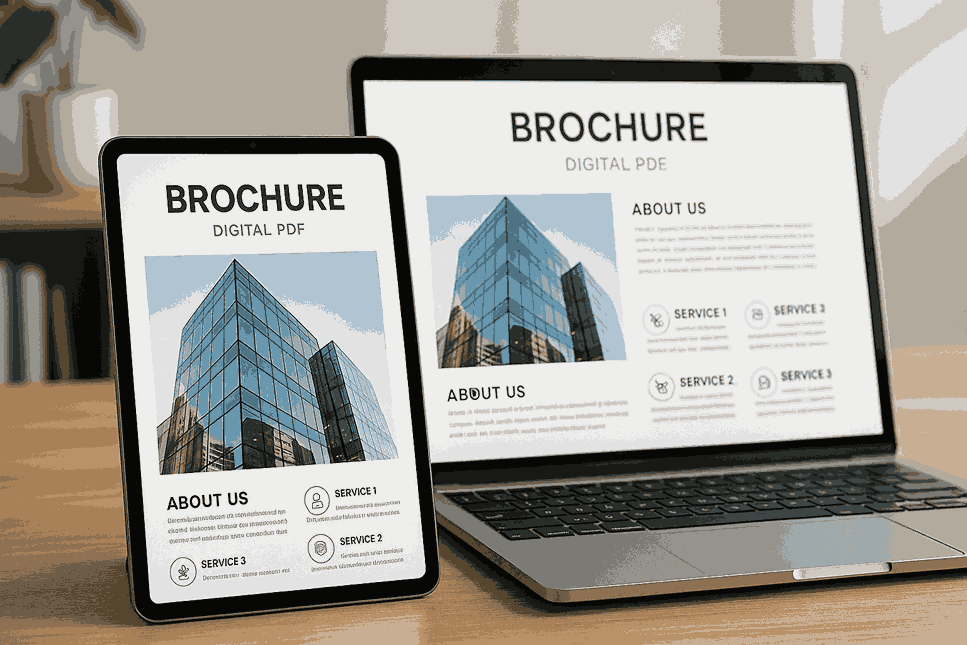
- Digital PDF brochures for WhatsApp, email, and websites
- Interactive brochures for online presentations
When executed strategically, brochure design bridges the gap between offline credibility and online convenience—a combination that few marketing assets can achieve.
What Is Brochure Designing? (Detailed Explanation)

Brochure designing is the structured process of creating a visual marketing document that communicates a company’s services, products, or brand story in a clear, organised, and persuasive format.
It is not just about layout or colours. Effective brochure designing combines:
- Marketing strategy
- Content planning
- Visual hierarchy
- Brand consistency
- Technical print and digital preparation
A professionally designed brochure answers three critical customer questions:
- What does this business offer?
- Why should I trust them over others?
- What action should I take next?
If a brochure fails to answer these questions, it becomes decorative rather than functional.
Primary Objectives of a Professional Brochure Designing
A brochure should always have a purpose beyond aesthetics.
Key objectives include:
- Grabbing attention within the first few seconds
- Explaining offerings clearly and concisely
- Building trust and brand credibility
- Supporting sales and consultation discussions
- Encouraging enquiries, calls, or visits
This is why experienced designers focus on clarity first and creativity second.
Why Brochure Designing Still Works in 2025
Many business owners believe brochures are outdated. In reality, their effectiveness has evolved, not declined.
1. Brochure Designing to Build Trust Faster Than Ads
People are naturally sceptical of ads. A well-designed brochure feels intentional, professional, and trustworthy.
2. Brochure Designing Support High-Value Decisions
Industries such as healthcare, real estate, education, manufacturing, and B2B services require detailed explanations. Brochures provide structured depth that ads cannot.
3. Brochure Designing Strengthen the Entire Marketing Funnel
A brochure often supports:
- Website visits
- Sales meetings
- WhatsApp follow-ups
- Email campaigns
Instead of replacing digital marketing, brochures enhance it.
Brochure Designing vs Flyer Designing
| Aspect | Brochure | Flyer |
|---|---|---|
| Information depth | High | Low |
| Lifespan | Long-term | Short-term |
| Usage | Branding & sales | Quick promotion |
| Format | Folded / multi-page | Single page |
For businesses focused on credibility and long-term branding, brochures deliver significantly more value.
PROFESSIONAL PROCESS, CONTENT STRATEGY & DESIGN PSYCHOLOGY
The Complete Professional Brochure Creation Process
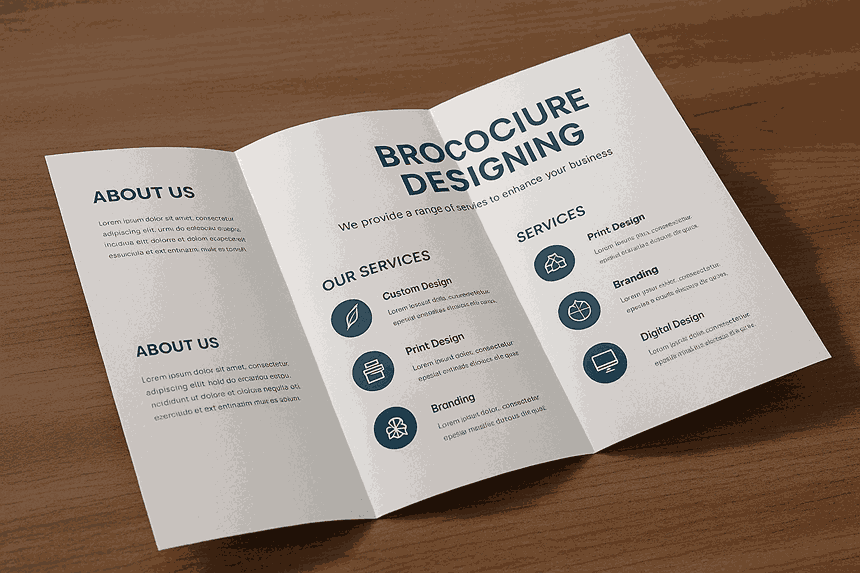
Effective brochures are not designed randomly. They follow a structured process that balances business goals, customer psychology, and visual clarity. Skipping any step usually results in a brochure that looks good but fails to convert.
Step 1: Defining the Business Goal Clearly
Every brochure must start with a clear objective. Before design begins, professional designers ask:
- Is the brochure meant to generate enquiries?
- Is it for brand introduction or company profile?
- Will it be used in meetings, exhibitions, or clinics?
- Is the target audience technical, general, or decision-makers?
For example, a brochure created for a real estate developer focuses on trust, visuals, and location benefits, while a brochure for a manufacturing company focuses on capabilities, certifications, and reliability. This clarity ensures the brochure speaks to the right audience in the right tone.
Step 2: Understanding the Target Audience
Audience understanding is critical in brochure designing. A brochure meant for doctors, corporate executives, or high-value clients will differ significantly from one designed for walk-in customers.
Designers consider:
- Age group and professional background
- Level of technical knowledge
- Buying intent (research vs ready-to-buy)
- Emotional triggers such as trust, safety, or prestige
When audience psychology is ignored, brochures become generic and ineffective.
Step 3: Content Planning and Information Hierarchy
Content is planned before visuals. This is one of the biggest differences between amateur and professional brochure designing.
The content hierarchy usually follows this flow:
- Headline – What problem do you solve?
- Introduction – Why should the reader care?
- Services / Products – What do you offer?
- Benefits – How does it help the customer?
- Trust Elements – Experience, clients, certifications
- Call-to-Action – What should they do next?
This structured flow ensures the reader does not feel overwhelmed and naturally moves toward a decision.
Step 4: Choosing the Right Brochure Format
The format determines how information is consumed.
| Format | Best Use Case |
|---|---|
| Bi-fold | Simple services, clinics, consultants |
| Tri-fold | Promotions, awareness campaigns |
| Multi-page | Corporate profiles, B2B companies |
| Digital PDF | WhatsApp, email, website downloads |
Choosing the wrong format can clutter content or dilute the message, even if the design looks attractive.
Step 5: Layout Psychology and Reading Patterns
People do not read brochures word by word. They scan.
Professional brochure designing uses proven reading patterns:
- Z-pattern for simple layouts
- F-pattern for content-heavy brochures
Important information is placed where the eye naturally pauses—such as top-left areas, fold openings, and central panels. This improves message retention without increasing text.
Step 6: Visual Hierarchy and White Space
White space is not wasted space. It improves clarity.
Good brochure layouts use:
- Clear section separation
- Proper margins and alignment
- Balanced text-to-image ratio
Crowded brochures feel cheap and confusing, while well-spaced layouts feel premium and trustworthy.
Step 7: Colour Selection and Brand Consistency
Colours communicate emotion faster than words.
Common associations:
- Blue → Trust and professionalism
- Green → Health, growth, and sustainability
- Red → Urgency and attention
- Black → Authority and luxury
In brochure designing, colours must match brand identity and remain consistent across all pages to build recognition.
Step 8: Typography for Readability
Typography affects how long a reader stays engaged.
Best practices include:
- Using no more than two font families
- Clear font size hierarchy
- Avoiding decorative fonts for body text
Readable typography directly improves comprehension and trust.
Step 9: Print and Digital Optimisation
A brochure must work equally well in print and digital formats.
Professional preparation includes:
- CMYK colour mode for printing
- 300 DPI images for clarity
- Proper bleed and trim settings
- Optimised PDF size for easy sharing
Ignoring these technical details can ruin an otherwise well-designed brochure.
Recommended Links For More Information
Cost of Brochure Designing in India (2025 – Realistic Breakdown)
The cost of brochure designing in India varies widely because not all brochures are created with the same depth, strategy, or quality. Understanding pricing helps businesses avoid poor-quality work and unrealistic expectations.
Typical Price Ranges
| Brochure Type | Average Cost (INR) |
|---|---|
| Bi-Fold Brochure | ₹2,000 – ₹5,000 |
| Tri-Fold Brochure | ₹3,000 – ₹8,000 |
| Corporate Brochure (6–8 pages) | ₹8,000 – ₹25,000 |
| Digital PDF Brochure | ₹3,000 – ₹10,000 |
| Interactive Brochure | ₹10,000 – ₹40,000 |
Low-cost options usually rely on templates and minimal content planning, while higher-priced projects involve strategy, custom layouts, and multiple revisions.
What Factors Influence Brochure Designing Pricing?
Pricing is determined by several practical factors, not just page count.
1. Content Complexity
Brochures that require:
- Professional copywriting
- Industry-specific language
- Structured storytelling
Cost more than simple promotional brochures.
2. Design Customisation
Custom illustrations, unique layouts, and brand-specific visuals increase effort and value compared to template-based designs.
3. Number of Pages or Folds
Multi-page brochures require more planning, layout consistency, and proofreading than single-fold designs.
4. Revisions and Turnaround Time
Urgent projects or those requiring multiple revision rounds usually increase the overall cost.
5. Print-Ready vs Digital-Only Delivery
Print-ready brochures require technical accuracy such as bleed, margins, and colour management, which adds to professional effort.
Why Professional Brochure Designing Is Worth the Investment
Many businesses attempt to design brochures internally or use online tools to save money. While this may reduce upfront cost, it often impacts credibility.
Professional brochure designing offers:
- Strategic content flow
- Brand-aligned visuals
- Higher trust perception
- Better conversion support
- Long-term usability
A brochure is often reused across meetings, exhibitions, and digital channels, making it a high-ROI asset when done correctly.
How to Choose the Right Brochure Design Company
Selecting the right agency or designer is critical to success.
1. Analyse Their Portfolio Carefully
Do not judge only by aesthetics. Look for:
- Clear structure
- Logical content flow
- Readable typography
- Industry relevance
A good portfolio demonstrates thinking, not just decoration.
2. Understand Their Process
Reliable brochure designers:
- Ask questions before designing
- Offer format and content suggestions
- Share clear timelines
- Explain revision policies
Avoid vendors who jump straight into visuals without planning.
3. Check Client Reviews and Testimonials
Reviews reveal:
- Communication quality
- Commitment to deadlines
- Post-delivery support
This helps reduce risk significantly.
4. Ensure Multi-Format Expertise
Your brochure should work:
- In print
- On mobile devices
- On desktop screens
- In presentations
Professional designers plan for all use cases.
5. Clarify Ownership and Deliverables
Always confirm:
- Editable source files
- Usage rights
- Final formats provided
Clear agreements prevent future issues.
Industry-Specific Brochure Applications
Different industries require different design approaches.
Healthcare and Clinics
Focus areas:
- Clean layouts
- Calm colour palettes
- Clear service explanations
Brochures help build trust and reduce patient hesitation.
Real Estate
Focus areas:
- High-quality visuals
- Floor plans
- Location advantages
These brochures support high-value decision-making.
Corporate and B2B Businesses
Focus areas:
- Professional tone
- Capability highlights
- Experience and credentials
Often used in meetings and proposals.
Education and Training Institutes
Focus areas:
- Course structure
- Admission process
- Visual clarity
Helps parents and students compare options easily.
Retail and Product-Based Businesses
Focus areas:
- Product categorisation
- Feature highlights
- Clear enquiry prompts
Supports distributors and in-store marketing.
Brochures in the Local Business Marketing Funnel
Local businesses use brochures to:
- Increase walk-ins
- Support local promotions
- Reinforce brand trust
When combined with Google Business Profile and local SEO, brochures strengthen offline and online visibility.
Advanced Optimisation Tips for High-Performing Brochures
A brochure should not only look visually appealing but also guide the reader toward a clear decision. Advanced optimisation focuses on improving usability, clarity, and response.
1. Design for Scanning, Not Reading
Most people do not read brochures line by line. They scan headings, visuals, and highlighted points.
Effective practices include:
- Clear section headings
- Short paragraphs (2–3 lines)
- Bullet points for benefits
- Visual breaks between sections
This allows readers to understand the message within seconds, even during busy situations like exhibitions or meetings.
2. Focus on Benefits Over Features
One common mistake in brochure designing is listing features without explaining value.
Instead of saying:
- “We offer customised solutions”
Explain:
- “Customised solutions that fit your business goals and budget”
This shift helps readers connect emotionally and understand how the service or product helps them, not just what it includes.
3. Strategic Placement of Call-to-Action (CTA)
A brochure must guide the reader toward the next step.
Effective CTAs include:
- Call for a consultation
- Visit the website
- Book an appointment
- Scan a QR code
CTAs should be placed:
- At the end of the brochure
- Near pricing or service summaries
- Close to trust elements like testimonials
Avoid placing CTAs randomly or hiding them in small text.
4. Use Visual Anchors to Guide Attention
Visual anchors help control how the reader moves through the brochure.
Examples include:
- Icons next to key services
- Highlighted boxes for important information
- Subtle colour contrasts for headings
These anchors make scanning easier and improve content retention.
5. Create One Brochure for Multiple Uses
A smart brochure is designed once and used across multiple platforms.
Common reuse formats:
- Printed handouts
- Website downloads
- Email attachments
- WhatsApp sharing
- Sales presentations
Planning for reuse improves return on investment without additional design costs.
10-Point Bonus Checklist for Quality Control
Before finalising any brochure, review it against this checklist:
- Clear value proposition on the cover
- Logical and easy-to-follow content flow
- Consistent branding (fonts, colours, logo)
- Readable font sizes across all sections
- Balanced white space
- High-quality, relevant images
- Strong trust indicators (experience, clients, certifications)
- Visible and simple CTA
- Error-free spelling and grammar
- Tested in both print and digital formats
If a brochure fails more than two points, refinement is necessary.
Frequently Asked Questions
Is brochure designing still effective in 2025?
Yes. Brochures remain effective because they provide structured information, build trust, and support both offline and digital marketing efforts.
How long does it take to create a professional brochure?
Most brochures are completed within 3–7 working days, depending on content readiness, complexity, and revision requirements.
Should businesses choose print or digital brochures?
Both formats serve different purposes. Printed brochures are ideal for meetings and walk-ins, while digital brochures work best for online sharing and follow-ups.
How many pages should a brochure have?
There is no fixed rule. Simple services work well with folded brochures, while corporate profiles and product-based businesses may require multiple pages.
Can brochures support online marketing campaigns?
Yes. Brochures are widely used in email marketing, WhatsApp promotions, sales follow-ups, and as downloadable website resources.
Final Conclusion – Why Brochure Designing is Important in 2025
Even in a digital-first world, brochures continue to hold strong marketing value. When created with clear structure, focused messaging, and professional execution, they help businesses communicate credibility, clarity, and confidence.
Brochures work best when treated as strategic assets rather than simple printed material. They support sales teams, strengthen brand perception, and enhance both offline and online marketing efforts.
Businesses that invest in professional brochure design consistently see better engagement, trust, and long-term usability.
Call to Action
If you want marketing material that truly represents your brand and supports business growth, professional design makes a measurable difference.
Logo Designer India provides end-to-end brochure solutions—from concept to print-ready delivery—designed to communicate clearly and convert confidently.
📩 Contact Logo Designer India today and create brochures that work beyond first impressions.