
Introduction
Brochure design is one of the most enduring forms of communication in marketing, branding, and information distribution. Even in an era dominated by mobile apps, websites, and AI-driven content, brochures remain a timeless medium that businesses across India, the USA, Europe, and Australia rely on. What makes brochures relevant even today is their ability to deliver structured, distraction-free information in a visually compelling way. Whether printed or digital, a well-executed brochure design helps organisations communicate with clarity and professionalism.
This guide explores brochure design in depth—types, principles, layout psychology, design strategies, industry applications, print considerations, digital trends, and common mistakes. Written for students, designers, marketers, educators, and business readers, this article provides a neutral, comprehensive, and globally applicable understanding of the topic.
Understanding Brochure Design in a Contemporary Context
A brochure is more than a folded sheet or a downloadable PDF—it is a carefully designed communication tool. Brochure design involves arranging text, images, visual hierarchy, and branding elements into a document that conveys a message clearly, attractively, and efficiently.
Although many assume brochures are “old-school,” the growing demand for catalogues, interactive PDFs, sales brochures, and digital product booklets in 2024–2025 proves otherwise. Brochure design now plays a key role in:
- Company presentations
- Real estate project marketing
- Product and service explanation
- Event promotion
- Educational course information
- Healthcare communication
- Retail and e-commerce catalogues
The key to effective brochure design is combining information clarity, aesthetic structure, and brand identity.
The Evolution of Brochure Design — Print to Digital
Brochures have evolved significantly over the years:
Stage 1: Traditional Print Brochures
Classic tri-folds, bi-folds, and multi-page booklets used by corporations and small businesses across the world.
Stage 2: Rich Visual Brochures
As photography, printing, and graphics improved, brochures became more visual and brand-driven.
Stage 3: Digital PDFs & Email Attachments
Businesses began distributing brochures digitally for cost savings and international reach.
Stage 4: Interactive Brochure Design
Clickable buttons, animations, embedded videos, and flipbook effects became popular.
Stage 5: Smart Brochures (2025)
Today, brochure design supports:
- QR codes
- Mobile-first layouts
- Cloud storage sharing
- Tracking analytics
- AI-generated visual enhancements
Yet, despite this evolution, the fundamental principles of clarity, structure, and design remain unchanged.
Types of Brochure Design (Detailed Breakdown)
Brochures come in a wide range of formats—each suited for specific communication goals.
1. Tri-Fold Brochure Design
A global classic. Divided into six equal sections, the tri-fold brochure is ideal for:
- Step-by-step explanations
- Corporate intros
- Travel packages
- Event details
Its compact, pocket-friendly nature makes it extremely popular.
2. Bi-Fold Brochure Design
This format consists of one fold, creating four large panels. A bi-fold design is suitable for:
- Corporate profiles
- Product introductions
- Service breakdowns
The large panel size allows for cleaner layouts and larger imagery.
3. Z-Fold Brochure Design
The “zig-zag” flow makes Z-fold brochures interactive and visually dynamic. Used commonly in:
- Tourism
- Real estate
- Event promotion
- Hospitality
Its unfolding style naturally guides the reader page by page.
4. Gate Fold & Double Gate Fold Brochures
Gate-fold brochures open like doors, revealing a central spread. They are:
- Elegant
- High-impact
- Suitable for luxury brands
Industries like automobiles, architecture, premium real estate, and jewellery often use this format to create a memorable reveal.
5. Multi-Page Brochure / Catalogue Design
Used when detailed information is required.
Common lengths: 8, 12, 16, 20, 24 pages.
Industries relying heavily on catalogues:
- Hospitals
- Universities
- Real estate developers
- Furniture stores
- Machinery manufacturers
Multi-page brochures offer space for in-depth explanations and extensive visual galleries.
6. Digital or Interactive Brochure Design
Digital brochures have become essential in 2025 due to their:
- Easy sharing
- Mobile accessibility
- Low cost
- Multimedia support
Features often included:
- Embedded videos
- Hyperlinked buttons
- Flipbook animations
- Interactive forms
Businesses with international clients prefer digital brochures for quick global distribution.
Key Components of Successful Brochure Design
Effective brochure design is not only about aesthetics—it also relies on strategy, structure, and functional clarity.
1. The Cover Page
The cover functions like a handshake. It must:
- Attract attention
- Set the tone
- State the purpose clearly
The cover determines whether the reader continues or drops the brochure.
2. Visual Hierarchy
Hierarchy ensures the reader intuitively understands what to look at first.
Tools used:
- Headlines
- Subheadings
- Font weight variations
- Colour contrast
- Spacing
Good brochure design directs attention intentionally.
3. Typography Selection
Fonts influence brand perception. In 2025, clean sans-serif fonts dominate brochure design:
- Montserrat
- Inter
- Poppins
- Roboto
- Helvetica Neue
Typographic balance creates professionalism and readability.
4. Colour Palette and Brand Consistency
Colour psychology influences mood:
- Blue = trust
- Green = growth and healing
- Red = urgency
- Black = luxury
Consistent colour application ensures a cohesive brochure design.
5. Content Structure
Brochure content must be:
- Skimmable
- Structured
- Benefit-oriented
- Clear
- Jargon-free
Short sentences, bullet lists, and micro-headings enhance readability.
6. Use of High-Quality Visuals
Blurry or outdated images reduce credibility. Modern brochure design relies on:
- High-resolution photography
- 3D architectural renderings
- Vector icons
- Minimal illustrations
Visuals strengthen brand storytelling.
7. Final CTA Placement
Even educational brochures benefit from a concluding Re—guiding readers to:
- Learn more
- Visit a website
- View a process
- Explore further details
A CTA provides completion and structure to brochure design.
Recommended Links For Continued Learning
Brochure Design Psychology — How People Actually Read
Design psychology focuses on how readers interact with visual information.
F-Pattern Reading
Readers scan:
- First line
- Mid-page highlights
- Left-side vertical content
Useful for text-heavy pages.
Z-Pattern Reading
Eyes move:
- Left to right
- Diagonally
- Left to right again
Common in brochure design where pages are open wide.
The Rule of Three
People absorb information better in groups of three. Designers often divide sections accordingly.
Cognitive Load Reduction
A brochure becomes more effective when it demands less mental effort. Clean layouts improve comprehension.
Print vs Digital Brochure Design: A Detailed Comparison
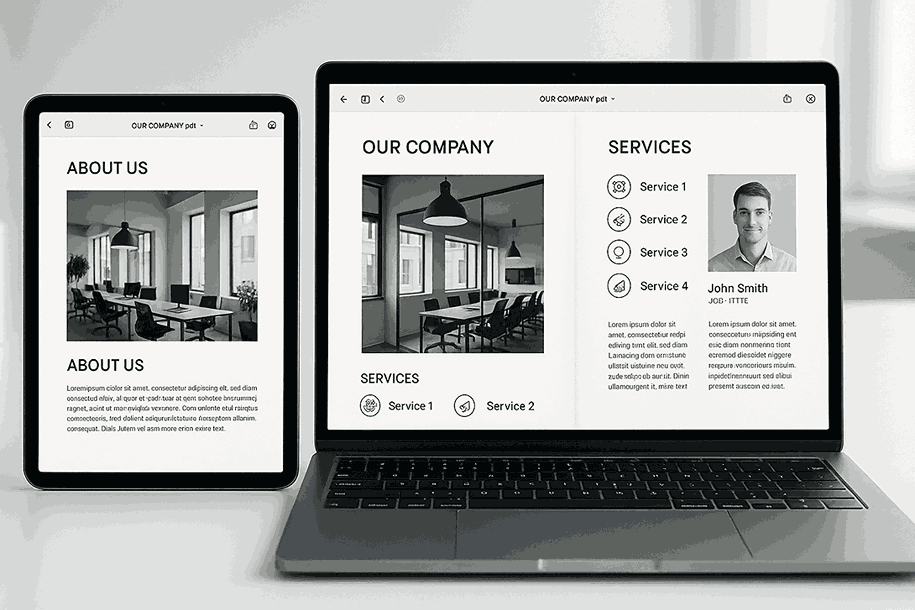
Brochure design today must consider both physical and digital ecosystems. Each format offers unique advantages, limitations, and design requirements. Understanding these differences helps designers produce brochures suited for diverse environments across India and global markets.
Print Brochure Design
Printed brochures offer a tangible experience, making them ideal for:
- Exhibitions
- Retail counters
- Corporate meetings
- Real estate site visits
- School or college fairs
- Walk-in clients
Advantages of Print Brochures
- Tangible Impression: Gives a sense of authenticity and seriousness.
- High Retention: Printed material is often kept longer than digital media.
- Sensory Appeal: Texture, finish, and weight add emotional value.
- Visibility: Works even without internet access.
Important Factors in Print Brochure Design
- Paper Quality: Common standards include 170–300 GSM art paper.
- Finishes: Matte, gloss, soft-touch, textured, or spot UV.
- Colour Mode: CMYK for print accuracy.
- Bleed and Margins: Usually 3 mm to prevent cutting issues.
- Image Resolution: 300 DPI for sharp printing.
Countries like India, China, Germany, and the USA still rely heavily on printed brochures for real estate, healthcare, education, and manufacturing sectors.
Digital Brochure Design
Digital brochures are widely used due to accessibility and cost-effectiveness. They suit global clients, especially when distribution spans multiple countries.
Advantages of Digital Brochures
- Highly shareable via email, WhatsApp, and social media.
- Cost-effective: No printing expenses.
- Interactive features such as clickable links, animations, and embedded videos.
- Analytics: Businesses can track open rates and link clicks.
- Scalable: Unlimited distribution.
Digital Brochure Best Practices
- Use RGB colour mode for brighter digital visuals.
- Optimise images for faster loading.
- Use mobile-first layouts, as most PDFs are opened on smartphones.
- Add link-based navigation (buttons, page jumps, QR codes).
- Ensure text remains readable on 6–7 inch screens.
Digital brochures dominate industries like SaaS, consulting, travel, online education, and architecture studios that serve global audiences.
Industry-Specific Applications of Brochure Design
Different industries use brochure design for different communication objectives. Here is a detailed view of how various sectors leverage brochures in their everyday functioning.
1. Real Estate Brochure Design
Real estate developers and agents worldwide rely heavily on brochures to present:
- Floor plans
- 3D renders
- Amenities
- Location advantages
- Pricing structure
A well-designed real estate brochure influences buying decisions. The layout must be clean, image-heavy, and visually aspirational.
2. Healthcare Brochure Design
Hospitals, clinics, and medical facilities use brochures to explain:
- Treatment packages
- Departments
- Health procedures
- Preventive care plans
- Doctor profiles
Medical brochure design must follow principles of clarity, trust-building, and low visual complexity.
3. Education Brochure Design
Schools, colleges, and universities use brochures for admissions. These brochures highlight:
- Courses offered
- Facilities
- Faculty credentials
- Placement statistics
- Student achievements
- Campus lifestyle
The tone must balance inspiration with factual detail.
4. Hospitality & Tourism Brochure Design
Used for:
- Tour packages
- Resort details
- Experience itineraries
- Dining menus
- Membership programs
The brochure design style here prioritises vibrant visuals, scenic photography, and emotional appeal.
5. Manufacturing & Industrial Brochure Design
Industrial companies create brochures for:
- Product specifications
- Machinery features
- Technical diagrams
- Safety standards
- Comparison charts
Designers must organise complex content into accessible formats.
6. Corporate Company Profile Brochure
Corporations worldwide use brochures to introduce:
- Mission & vision
- Services
- Team
- Achievements
- Partnerships
The design tone is formal, minimal, and reliability-focused.
The Complete Brochure Design Workflow (Step-by-Step Guide)
Brochure design is a structured process involving collaboration between designers, marketers, and clients. Here is the globally accepted workflow:
Step 1: Requirement Analysis
The designer gathers essential information:
- Purpose
- Target audience
- Distribution method (print or digital)
- Content tone
- Brand identity
This step ensures alignment and reduces revisions later.
Step 2: Content Gathering
All text, photos, charts, diagrams, and brand guidelines are collected. Proper content improves efficiency and design quality.
Step 3: Layout Planning and Wireframing
A wireframe (sketch or digital outline) helps plan:
- Panel structure
- Image placement
- Text hierarchy
- Flow of information
This prevents design clutter.
Step 4: Visual Design
During this stage, designers apply:
- Typography
- Colour palette
- Background patterns
- Iconography
- Photography style
Visual design gives the brochure its final personality.
Step 5: Review and Refinement
Clients review layout, readability, alignment, and content accuracy. Multiple rounds of refinement improve design precision.
Step 6: Final Output Preparation
For print:
- CMYK export
- Bleed & margin setup
- Print-ready 300 DPI images
For digital:
- PDF optimisation
- Clickable links
- Mobile responsiveness
Visit Logo Designer India To Get Started
Brochure Design Trends in 2025
Brochure design styles shift as visual culture evolves. In 2025, several new and emerging trends dominate the global market.

Trend 1: Minimalist, Clean Layouts
Modern brochures rely on simplicity—thin separators, generous white space, and restrained colour palettes.
Trend 2: Full-Page Hero Imagery
Large, striking images help convey mood and create emotional depth.
Trend 3: Asymmetrical Layouts
These break monotony and add visual interest without reducing clarity.
Trend 4: High-Contrast Typography
Bold headlines paired with subtle body text improve hierarchy.
Trend 5: Eco-Friendly Printing
Recycled paper and soy-based inks are gaining popularity worldwide.
Trend 6: Dark Mode Brochure Design
Presented primarily in digital brochures for premium, modern appeal.
Trend 7: Infographic-Driven Pages
Complex information shown through diagrams and icons increases comprehension.
Trend 8: Mobile-First Digital Brochures
Layouts designed to fit vertically scrolling screens.
Trend 9: QR Code Integration
Print brochures now often complement digital experiences.
Trend 10: Interactive PDF Brochures
Buttons, animations, and embedded media enhance user experience.
Common Mistakes in Brochure Design and How to Avoid Them
Even professionally produced brochures sometimes fail because of design or content errors. Here are mistakes to avoid:
- Overcrowded pages that overwhelm readers
- Too many fonts causing visual inconsistency
- Low-resolution images reducing credibility
- Poor hierarchy leading to unclear message flow
- Weak colour contrast making text difficult to read
- Ignoring printing limitations such as bleed and CMYK accuracy
- Overuse of stock photos, creating generic impression
- Lack of white space, making layouts stressful to the eye
Avoiding these mistakes elevates brochure design quality significantly.
Advanced Psychology Principles Used in Brochure Design
Understanding how people perceive visuals helps designers create more effective brochures.
1. Hick’s Law
Simpler choices lead to faster decisions. Brochures should not overwhelm readers with too many options.
2. The Von Restorff Effect
Highlighting one key element (e.g., an important number or feature) increases recall.
3. Gestalt Principles
People perceive grouped elements as connected. This improves organisation.
4. The Serial Position Effect
Information placed at the beginning and end is remembered most easily.
Using such psychological principles makes brochure design more intuitive and memorable.
10 Bonus Insights for Highly Effective Brochure Design
These advanced-level pointers elevate brochure design finesse.
- Use grid systems for professional alignment.
- Keep margins wider than usual for a premium feel.
- Use just 2–3 font weights for smooth hierarchy.
- Use icon sets that match brand personality.
- Add micro-captions under images for clarity.
- Highlight statistics using contrast boxes.
- Use subtle gradients for depth.
- Divide long text into clearly labelled sections.
- Use visual metaphors to simplify concepts.
- End with a navigational guide (website, page numbers, QR).
Frequently Asked Questions (FAQs)
Q1: What is the most suitable brochure format for detailed content?
A multi-page brochure or catalogue is best for detailed explanations.
Q2: Are digital brochures replacing printed ones?
No. Both formats coexist. Digital brochures offer interactivity; print brochures create strong physical impressions.
Q3: What is the role of typography in brochure design?
Typography determines readability, mood, and brand alignment.
Q4: How long does brochure design usually take?
Simple brochures take 3–5 days; complex catalogues may take 1–2 weeks.
Q5: What industries use brochures the most?
Real estate, education, healthcare, hospitality, retail, manufacturing, and corporate sectors.
Conclusion
Brochure design in 2025 remains a powerful, adaptable, and strategic communication tool. It combines visual storytelling, structured information, and branding to create meaningful engagement. Both print and digital formats have unique benefits, and each serves industries differently based on communication style and audience preference. Understanding design principles, user psychology, layout techniques, and current trends is essential for creating brochures that inform, inspire, and guide readers effectively.
CTA
If you’re looking to craft a clear, modern, and visually compelling brochure—whether for print or digital use—Logo Designer India can help transform your ideas into a structured, professionally designed brochure. From layout planning to high-quality visual execution, the team ensures your content is presented in a way that is easy to understand and aligned with your brand identity.
Explore brochure design solutions, browse past work, or request a customised concept through,
Logo Designer India to elevate your next presentation or communication project.